Kati Basti Treatment for Back Pain: 2026 Guide to Procedure, Oils, Cost & Evidence
If you have typed “Kati Basti treatment for back pain” into a search bar today, chances are you have already tried the heat patch, the pain gel, the stretching video, and maybe even a short course of painkillers. What you have likely not had is a therapy that works on the deeper layers of the lumbar spine, holds warmth there for 30–45 minutes, and addresses the root cause instead of masking the signal. That is exactly what Kati Basti (also spelled Kati Vasti) is designed to do.
In this 2026 guide, the clinical team at Keva Ayurveda, India’s first NABH-accredited Ayurveda clinic, breaks down what Kati Basti actually is, how it works, who it is best suited for, what the latest AYUSH and peer-reviewed evidence says, what it costs, and how it fits into a structured Spine & Joint Care program supervised by qualified Ayurvedic doctors. No jargon for jargon’s sake — just a clear, evidence-aware read for someone who is genuinely weighing their options.
TL;DR / Quick Answer
Kati Basti treatment for back pain is a localized Ayurvedic therapy in which warm, medicated oil is pooled and retained over the lumbosacral region inside a black-gram dough ring for 30–45 minutes per session. It is recommended in the Ministry of AYUSH’s Standard Treatment Protocol for Katishoola (low back pain) and is typically prescribed as a 7–21 day course using oils like Mahanarayana Taila. A 2023 randomized trial published in the Journal of Ayurveda and Integrative Medicine found significantly greater pain reduction with Kati Basti plus oral Ayurvedic medication than with topical diclofenac.
What Is Kati Basti and How It Differs from Janu and Greeva Basti
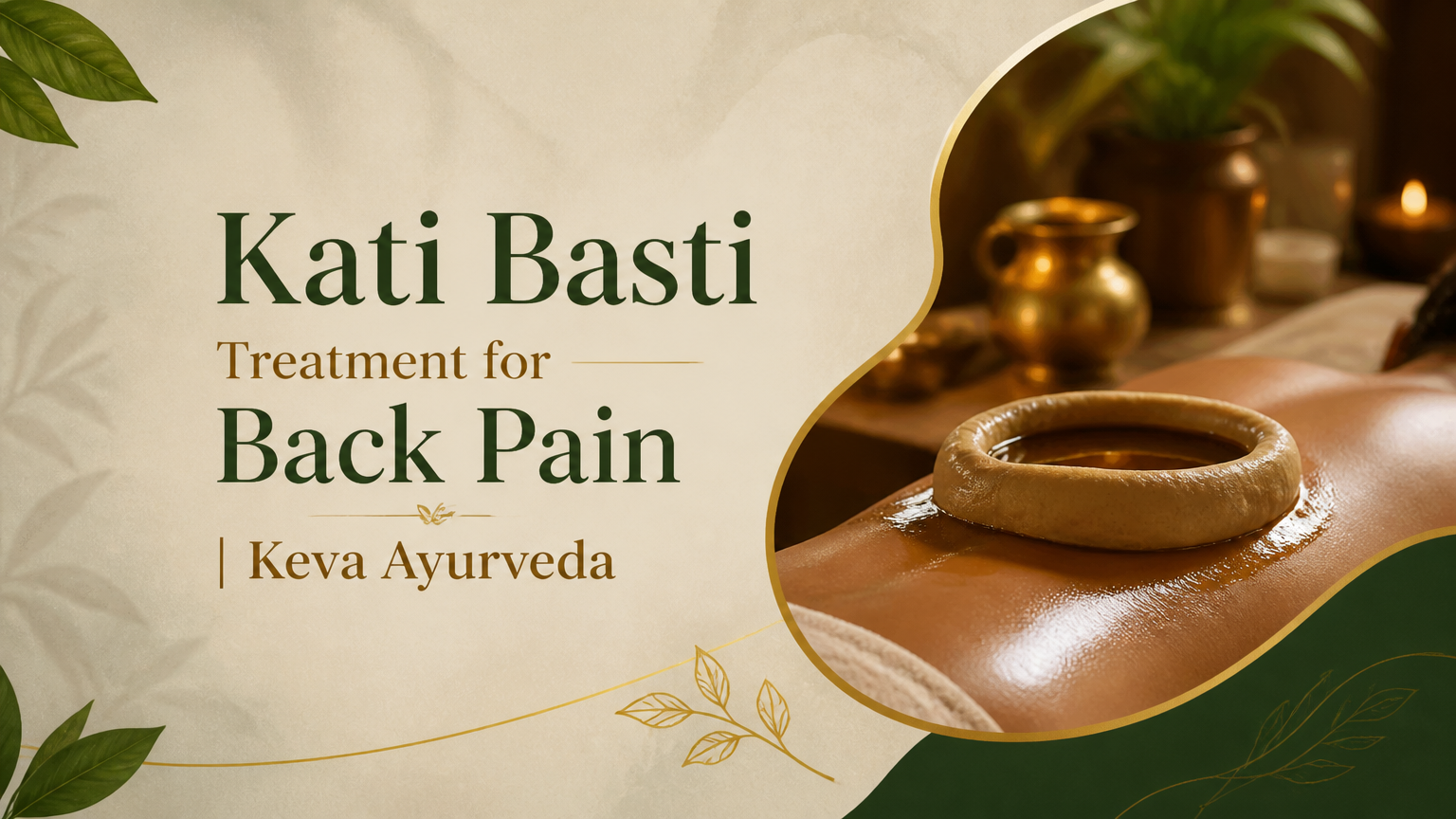
Kati Basti (Sanskrit: Kati = low back / waist; Basti = to retain / hold) is a targeted external oleation therapy from the Panchakarma branch of Ayurveda. A ring made from black-gram (urad dal) flour dough is built on the patient’s lumbosacral area, and warm, herb-infused medicated oil is poured into this ring. The oil is held at a therapeutic temperature for 30–45 minutes, allowing prolonged, deep contact with the tissues that surround the lower spine — something a regular Abhyanga (full-body oil massage) simply cannot achieve.
Three members of the same Basti family are commonly confused:
| Therapy | Target Region | Typical Indication |
|---|---|---|
| Kati Basti | Lumbosacral / lower back | Low back pain, sciatica, lumbar spondylosis, disc bulge |
| Greeva Basti | Cervical / neck | Cervical spondylosis, neck stiffness, radiating arm pain |
| Janu Basti | Knee joint | Osteoarthritis of the knee, post-injury stiffness, patellar pain |
At Keva Ayurveda, all three are offered as part of the Spine & Joint Care specialty, with selection based on a doctor’s assessment rather than self-selection. This trio-based thinking is what makes Kati Basti a targeted therapy, not a generic back massage.
How Kati Basti Works: The Ayurvedic Mechanism of Action
In Ayurvedic physiology, most chronic low back pain is attributed to an aggravated Vata dosha — the functional principle responsible for movement, nerve conduction, and tissue elasticity — lodging in the Kati region. This produces the classic triad of symptoms patients describe: pain (shoola), stiffness (stambha), and restricted movement (gati santati).
Kati Basti works through four overlapping mechanisms:
- Snehana (oleation) – The warm oil penetrates skin and superficial muscle layers, replenishing the unctuous quality that Vata deficiency has depleted. This is why dryness, cracking and a “pulled” sensation in the lower back often improve first.
- Swedana (fomentation) – Sustained warmth dilates local blood vessels, relaxes paraspinal muscles, and reduces spasm around the affected nerve roots.
- Deepana & Pachana – When combined with the Purvakarma (preparatory) oil massage and steam that usually precede Kati Basti, the therapy supports local Agni (metabolic activity), helping inflamed tissues shift out of a stagnant state.
- Nourishment of Majja and Asthi dhatus – The classical texts describe Kati Basti as specifically targeting the bone and marrow tissues of the lower spine, an effect that modern physiology partially mirrors through enhanced microcirculation and lymphatic drainage.
Practically, what patients feel is: warmth that stays in the lower back for several hours after the session, easier bending and twisting, and a gradual reduction in the need for rescue painkillers. Outcomes vary by condition, severity, age, and adherence to the doctor’s home-care advice — an honest framing that the Keva Ayurveda clinical team emphasizes for every patient.
Conditions Treated with Kati Basti for Back Pain
Kati Basti is most commonly prescribed for the following conditions, which broadly correspond to the diagnosis of Katishoola in Ayurveda and “non-specific mechanical low back pain” or “lumbosacral radiculopathy” in modern medicine:
- Lumbar spondylosis (age-related wear and tear of the lumbar discs and facet joints)
- Sciatica (pain radiating from the lower back down the leg, often along the sciatic nerve distribution)
- Intervertebral disc prolapse (IVDP) without surgical indication
- Chronic non-specific low back pain lasting more than 12 weeks
- Postural strain from long sitting, desk work, or driving
- Muscle spasm of the erector spinae and quadratus lumborum
- Ankylosing spondylitis and inflammatory back pain (as an adjunct, not a stand-alone treatment)
- Recovery support after lumbar injuries or post-delivery lower-back weakness
It is worth noting what Kati Basti is not designed to treat: acute fractures, active infections of the spine, progressive neurological deficit (such as foot drop or bladder/bowel involvement), or red-flag conditions that need urgent surgical or specialist intervention. Ayurveda does not replace emergency or surgical care, and Keva Ayurveda’s intake protocols are built around appropriate referral when those flags appear.
Step-by-Step Kati Basti Procedure
The classical procedure is divided into three phases, often explained in textbooks as Purvakarma, Pradhanakarma, and Paschatkarma. Here is how each phase typically unfolds at a NABH Panchakarma-accredited clinic like Keva Ayurveda.
Purvakarma (Preparation, 15–25 minutes)
- The patient lies face-down on a clean, padded therapy table.
- The lumbosacral area is gently cleaned and warmed with a light Abhyanga (oil massage) to relax superficial muscles.
- A thick, leak-proof ring is built from black-gram (urad dal) dough, approximately 4–5 inches in diameter, directly over the painful area (usually L3–S1).
- The dough ring is sealed against the skin so that no oil leaks during retention.
Pradhanakarma (Main Procedure, 30–45 minutes)
- Warm medicated oil — typically heated to a comfortably warm but never scalding temperature — is slowly poured into the dough well.
- Throughout the session, the therapist replaces cooled oil with fresh warm oil, ensuring a consistent therapeutic temperature.
- The patient rests quietly, often breathing gently, while the oil does its work on the deep paraspinal tissues.
- After 30–45 minutes, the oil is carefully drained and collected (the oil is typically single-use for hygiene).
Paschatkarma (Post-Procedure Care, 15–20 minutes)
- The dough ring is removed and the area is gently wiped clean.
- A light massage with a small amount of the same oil is performed to settle the tissues.
- The patient is asked to rest for 15–20 minutes before standing, to avoid any postural sway.
- Internal Ayurvedic medicines, diet guidance, and lifestyle advice are continued between sessions.
Quick-Reference Procedure Table
| Step | Duration | Purpose |
|---|---|---|
| Pre-massage + dough ring | 15–25 min | Prepare skin, contain oil |
| Warm oil retention | 30–45 min | Snehana + Swedana at lumbosacral level |
| Post-care + rest | 15–20 min | Settle tissues, prevent postural stress |
| Total session time | 60–90 min |
Common Medicated Oils Used in Kati Basti
The choice of oil is not arbitrary. Classical Ayurvedic texts describe specific formulations for specific conditions, and at Keva Ayurveda the oil selection is finalized after doctor consultation. The most commonly used oils include:
- Mahanarayana Taila – A widely studied classical oil containing Ashwagandha, Bala, Dashamoola, and several other Vata-pacifying herbs. Often the first choice for degenerative low back pain and is the oil used in the 2023 JAIM randomized trial referenced above.
- Sahacharadi Taila – Traditionally preferred when back pain is associated with sciatica-like radiation down the legs.
- Dhanwantharam Taila – A postpartum and musculoskeletal tonic oil frequently used when weakness and stiffness dominate over acute inflammation.
- Ksheerabala Taila – A milk-processed oil considered lighter and suitable for patients with sensitive skin or milder symptoms.
- Kottamchukkadi Taila – Warming and stimulating, often added when coldness, morning stiffness, and sluggish circulation are reported.
The oil that goes on your back should match the pattern of your pain — not be the same for every patient. This is one of the reasons Kati Basti should always be performed under direct medical supervision rather than as a standalone spa-style procedure.
Treatment Duration, Course Length & What to Expect
There is no single “correct” course length, but the Ministry of AYUSH’s Standard Treatment Protocol and most clinical practice converge on a few common patterns:
- Minimum therapeutic course: 7 days
- Standard course for chronic back pain: 14 days
- Severe or long-standing cases: Up to 21 days (often delivered through inpatient Panchakarma)
- Maintenance / prevention: 3–5 days every 4–6 weeks for patients with a recurring pattern
What most patients notice:
- After 2–3 sessions: warmth retention, mild reduction in stiffness, better sleep when lying on the back.
- After 5–7 sessions: noticeable drop in pain intensity, easier morning movement, reduced reliance on painkillers.
- After a full 14-day course: meaningful improvement in pain and function, with results typically measured using Visual Analog Scale (VAS) and Oswestry Disability Index (ODI) scores by the treating doctor.
At Keva Ayurveda, the same back-pain patient might be advised an outpatient Panchakarma course of daily 1–1.5 hour visits, or — for more severe or refractory cases — an inpatient program of 12, 15, or 21 days with two personalized therapy sessions per day, daily medical supervision, customized diet, and yoga. The choice is clinical, not commercial.
Evidence & Outcomes: What the Research Says
A therapy that has been practiced for centuries is interesting; a therapy that has been measured in modern trials is more convincing. Three recent, independent sources of evidence are worth knowing.
1. AYUSH Ministry Standard Treatment Protocol (2024). The Ministry of AYUSH, Government of India, lists Kati Basti as a recommended external oleation and sudation therapy within its Standard Treatment Protocol for Selected Musculoskeletal Disorders (Katishoola, Sandhigata Vata, Amavata). The protocol specifies a 30–45 minute session duration, a 7–21 day course length, named medicated oils such as Mahanarayana Taila, and outcome assessment using VAS pain scores and ODI. This places Kati Basti firmly inside India’s national AYUSH framework rather than the folk-remedy category.
2. Randomized clinical trial in Journal of Ayurveda and Integrative Medicine (2023). Authors affiliated with the Institute of Ayurveda and Integrative Medicine (I-AIM), Bengaluru compared Kati Basti with Mahanarayana Taila plus oral Ayurvedic medication against topical diclofenac for chronic low back pain. After 14 days, the Ayurveda group showed a mean VAS reduction of approximately 4.5 points versus 2.6 points in the diclofenac group, alongside improved Roland–Morris disability scores. The authors attributed the deeper benefit to sustained warm oil penetration — something surface analgesics cannot replicate.
3. WHO Global Strategy for Traditional Medicine 2025–2034. The World Health Organization’s most recent global strategy explicitly calls for integration of evidence-based traditional therapies such as Ayurvedic external oleation procedures (the same category as Kati Basti) into national health systems, and urges member states to build training, reimbursement, and safety frameworks for medicated oils used in such therapies. For patients, this signals a move from “alternative” toward accepted, insured care.
The direction of travel is clear: therapies like Kati Basti are being formalized, measured, and absorbed into mainstream musculoskeletal care pathways.
Safety, Side Effects & Contraindications
When performed correctly, Kati Basti is generally very safe. The side effects reported in clinical practice and patient feedback are mostly mild and self-limiting:
- Slight warmth or redness over the treated area (resolves in a few hours)
- Mild oily residue on clothing if post-care instructions are not followed
- Rare local skin sensitivity, especially in patients with eczema, psoriasis, or known medicated-oil allergies
Kati Basti should be avoided, modified, or used only with specialist oversight in these situations:
- Acute lumbar fracture or post-surgical lumbar spine (until cleared by the operating surgeon)
- Active skin infection, open wounds, or dermatitis over the lumbosacral area
- Uncontrolled diabetes with poor wound healing
- Active malignancy in the spine or pelvis
- High fever or systemic infection
- Pregnancy (especially second and third trimester — a modified protocol may still be possible)
- Severe cardiovascular conditions where prolonged prone lying is unsafe
This is why every patient at Keva Ayurveda goes through a structured pre-treatment evaluation — including a doctor consultation (₹500 first visit, ₹350 follow-up), case history, and review of relevant investigations — before Kati Basti is added to the plan.
Kati Basti vs. Other Back Pain Therapies: A Quick Comparison
| Therapy | Approach | Best For | Evidence Strength | Cost Range Per Session (2026, India) |
|---|---|---|---|---|
| Kati Basti | Localized warm oil retention + Panchakarma | Chronic Vata-pattern low back pain, sciatica, lumbar spondylosis | Moderate — RCT support + AYUSH protocol | ₹1,500 – ₹2,500 |
| Physiotherapy | Exercise + manual therapy + electrotherapy | Mechanical back pain, post-injury rehab | Strong | ₹800 – ₹2,000 |
| Chiropractic / Osteopathy | Spinal manipulation | Acute mechanical low back pain, some radiculopathy | Moderate | ₹1,500 – ₹3,500 |
| Oral NSAIDs (e.g. ibuprofen) | Systemic pain relief | Short-term acute pain only | Strong for short-term use | ₹30 – ₹150 per strip |
| Topical diclofenac | Local NSAID gel | Mild localized pain | Moderate | ₹200 – ₹400 per tube |
| Surgery (e.g. discectomy) | Structural correction | Red-flag conditions, progressive neurology | Strong for selected indications | ₹80,000 – ₹3,00,000+ |
What Kati Basti uniquely offers in this list is deep, sustained, localized warmth combined with herbal pharmacology. It is most often used alongside, not instead of, evidence-based lifestyle and rehabilitative care.
Who Should Consider Kati Basti — and Who Should Wait
Kati Basti tends to deliver the best results for patients who match most of these criteria:
- Mechanical / musculoskeletal low back pain lasting more than 6 weeks
- Pain worse with prolonged sitting or forward bending
- Morning stiffness lasting under 30 minutes (suggests mechanical rather than inflammatory cause)
- No red-flag symptoms (no bowel/bladder issues, no progressive leg weakness, no night pain with weight loss)
- Willing to commit to a 7–21 day course and follow home-care advice
- Already tried or considered physiotherapy and pain medication without adequate relief
You should pause and seek conventional medical assessment first if you have red-flag symptoms, sudden severe pain after trauma, fever with back pain, or progressive neurological loss. Ayurveda complements rather than replaces emergency or surgical care.
Cost of Kati Basti Treatment in India (2026 Guide)
Pricing in the Ayurveda market in 2026 varies by city, clinic accreditation, and whether the session is taken as part of a Panchakarma package or as a standalone therapy. Typical reference ranges (market-wide, not clinic-specific):
| City | Per-Session Kati Basti (Standalone) | As Part of 14-Day Panchakarma Package |
|---|---|---|
| Bangalore | ₹1,500 – ₹2,500 | ₹11,999 – ₹25,000+ |
| Mumbai | ₹1,800 – ₹3,000 | ₹15,000 – ₹30,000+ |
| Delhi NCR | ₹1,500 – ₹2,800 | ₹13,000 – ₹28,000+ |
| Hyderabad | ₹1,200 – ₹2,200 | ₹10,000 – ₹22,000+ |
| Chennai | ₹1,200 – ₹2,500 | ₹10,000 – ₹24,000+ |
At Keva Ayurveda, the published pricing for the parent Panchakarma programs starts at ₹11,999 for a 12-day outpatient course and goes up to ₹15,999 for a 15-day course, with the final figure depending on the personalized combination of therapies, doctor-prescribed medications, and any supportive procedures. Inpatient Panchakarma options of 12, 15, or 21 days are available for patients with more severe or chronic back conditions. Individual therapy pricing for sessions such as Abhyangam and Shirodhara is ₹1,499 per session; for Kati Basti specifically, the team confirms the exact per-session figure after the first consultation, since the prescription is personalized.
Cashless insurance coordination is available with major insurers including ACKO, Navi, Aditya Birla, SBI General, ICICI Lombard, and ManipalCigna, processed through TPAs such as FHPL, Vidal, Paramount, and Vipul MedCorp — a meaningful consideration for anyone planning a multi-week course.
If you would like a personalized estimate, you can book a Kati Basti consultation or call +91-8050080058 / +91-8050056033.
Expert Insights: Where Kati Basti Is Heading in 2026
A few trends worth keeping on your radar if you are considering Kati Basti in 2026:
1. AYUSH protocols are becoming the clinical baseline. With the Ministry of AYUSH publishing standard treatment protocols for musculoskeletal disorders, accredited clinics are increasingly aligning their procedures — including oil temperature, session duration, course length, and outcome measurement — with national guidelines rather than informal practice.
2. Outcome measurement is becoming routine. The use of VAS and ODI scores, paired with documentation of functional goals (sleeping on the back without pain, sitting for two hours, walking a kilometre), is becoming standard in better-run clinics. Ask your clinic how they will measure your improvement.
3. Insurance is catching up. As the WHO Global Strategy for Traditional Medicine 2025–2034 urges member states to build reimbursement pathways, more insurers are starting to cover evidence-based Ayurvedic therapies. Choosing an NABH-accredited clinic materially improves the chance of cashless support.
4. Integration with rehabilitation beats either-alone. The strongest published outcomes tend to come from programs that combine Kati Basti with targeted physiotherapy, yoga, and ergonomic correction. Look for clinics that offer all four under one roof, like Keva Ayurveda’s Panchakarma Treatment program.
5. Personalization is non-negotiable. Oils, duration, course length, and adjunct therapies should all be selected after a doctor consultation — not as a generic “back pain package”. This is the difference between a clinical protocol and a spa treatment.
Conclusion
Kati Basti treatment for back pain is no longer just a traditional therapy passed down through generations — it is a formally protocolized, increasingly evidence-based component of modern musculoskeletal care. When performed under qualified Ayurvedic doctors and trained Panchakarma therapists, using the right medicated oil for the patient’s specific pain pattern, and delivered as part of a structured 7–21 day course, it offers something most surface-level treatments cannot: sustained, deep, localized healing of the lumbosacral region.
If you have been living with chronic low back pain and want a thorough, root-cause-oriented evaluation from an NABH-accredited Ayurveda team with 13+ years of clinical experience, the next step is straightforward. Book a consultation with the clinical team led by Dr. Krishna Kumar (BAMS, FAGE — Manipal) and Dr. Deepika M (BAMS, FAGE — Manipal), bring any recent scans or reports, and ask whether Kati Basti fits your specific pattern of back pain.
Book a Kati Basti consultation with Keva Ayurveda today, call +91-8050080058 / +91-8050056033, or start with an online consultation from anywhere in India. Outcomes depend on your condition, severity, age, and adherence — but every informed patient begins with a conversation.
Ready to Begin Your Kati Basti Consultation?
Connect with Keva Ayurveda’s clinical team for a personalized assessment of your back pain and a tailored Kati Basti plan.
Frequently Asked Questions
1. What is Kati Basti treatment for back pain?
Kati Basti treatment for back pain is a localized Ayurvedic therapy in which warm, medicated oil is pooled over the lumbosacral region inside a black-gram dough ring for 30–45 minutes per session, repeated over 7–21 days. It is primarily used for chronic low back pain, sciatica, lumbar spondylosis, and disc-related discomfort.
2. How many sessions of Kati Basti are needed for back pain relief?
A minimum therapeutic course is 7 daily sessions; the standard recommendation for chronic low back pain is 14 sessions, and severe or long-standing cases may need up to 21 sessions. Your doctor may also advise periodic maintenance sessions every 4–6 weeks after the main course.
3. Which medicated oil is used in Kati Basti?
The most commonly used oils are Mahanarayana Taila (general Vata-pacifying), Sahacharadi Taila (sciatica pattern), Dhanwantharam Taila (weakness and stiffness), Ksheerabala Taila (sensitive skin or mild symptoms), and Kottamchukkadi Taila (coldness and morning stiffness). The final choice is made after a doctor consultation based on your specific pain pattern.
4. Is Kati Basti safe, and does it have side effects?
Kati Basti is generally very safe when performed under qualified Ayurvedic doctors and trained Panchakarma therapists. The most common side effects are mild local warmth, temporary skin redness, or rare oil-allergy reactions in sensitive individuals. It should be avoided in acute fractures, active skin infections, pregnancy (later trimesters), and red-flag neurological conditions.
5. How much does Kati Basti treatment cost in India in 2026?
Across Indian metros in 2026, standalone Kati Basti sessions typically range from ₹1,200 to ₹3,000 depending on the city. When taken as part of a 12–15 day Panchakarma package, the overall cost is usually ₹11,999–₹30,000. At Keva Ayurveda, Panchakarma packages start at ₹11,999 for a 12-day outpatient course, and individual therapy pricing for sessions such as Abhyangam and Shirodhara is ₹1,499 per session; exact Kati Basti session pricing is confirmed after consultation.
6. Can Kati Basti help with sciatica and disc bulge?
Yes. Kati Basti is one of the most commonly prescribed Ayurvedic therapies for sciatica and non-surgically indicated intervertebral disc prolapse. It helps by reducing local inflammation, relaxing paraspinal muscle spasm, and improving microcirculation around the affected nerve roots. It is, however, an adjunct and works best alongside lifestyle correction and physiotherapy.
7. Is Kati Basti covered by insurance?
Coverage depends on your insurer and policy. At Keva Ayurveda, cashless insurance coordination is available through major insurers including ACKO, Navi, Aditya Birla, SBI General, ICICI Lombard, and ManipalCigna, processed via TPAs such as FHPL, Vidal, Paramount, and Vipul MedCorp. Choosing an NABH-accredited clinic materially improves the chances of cashless support.
8. What is the difference between Kati Basti and Janu Basti?
Kati Basti is performed over the lumbosacral (lower back) region for low back pain, sciatica, and lumbar spondylosis. Janu Basti is performed over the knee joint for knee osteoarthritis, post-injury stiffness, and patellar pain. Both follow the same dough-ring and warm-oil principle but target different joints; they are sometimes combined in patients with spine-to-knee referred pain.