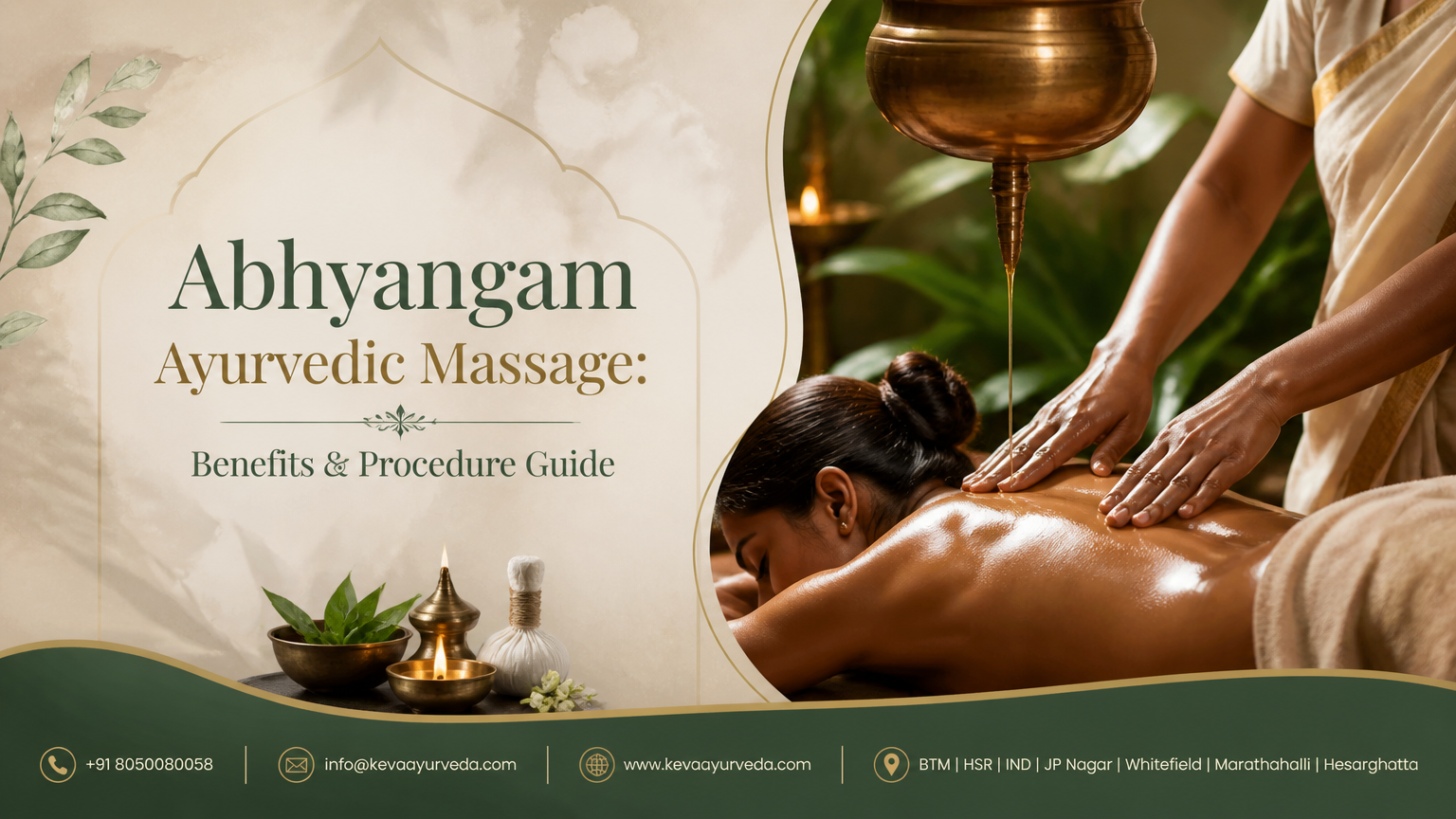
Abhyangam Ayurvedic Massage: Benefits & Procedure Guide
Executive Summary & Overview
Abhyangam, the classical Ayurvedic full-body oil massage, is one of the most revered snehana (oleation) therapies described in the ancient texts of Charaka Samhita, Sushruta Samhita, and Ashtanga Hridaya. More than a luxury wellness indulgence, Abhyangam is a clinically preventive and therapeutic procedure used to balance the tridoshas—Vata, Pitta, and Kapha—while nourishing the dhatus (tissues), supporting ojas (vital essence), and eliminating accumulated ama (metabolic toxins).
At Keva Ayurveda, a NABH Accredited Ayurveda Clinic operating across 7 branches in Bangalore, Abhyangam is performed by trained Ayurveda Panchakarma Therapists under the supervision of senior Vaidyas (Ayurvedic physicians). Each session is customized after a Prakriti (constitution) and Vikriti (current imbalance) assessment, ensuring that the choice of oil, massage technique, pressure, duration, and post-procedure regimen are tailored to the individual rather than applied as a one-size-fits-all protocol.
This guide explains the science, the step-by-step procedure, evidence-based benefits, herbal oils used, dietary recommendations, FAQs, and pricing—so that you can make an informed decision about integrating Abhyangam into your wellness or therapeutic journey.
Classical Ayurvedic Principles & Root Cause Analysis
Ayurveda views health as a state of dynamic equilibrium between the doshas, dhatus, malas (wastes), and a contented mind (prasanna atma, indriya, manah). Disease (vyadhi) arises when this equilibrium is disturbed—primarily through dosha aggravation and ama accumulation.
The Tridosha Framework
- Vata Dosha – Composed of Akasha (space) and Vayu (air). Governs movement, nerve conduction, circulation, elimination, and sensory function. When aggravated, it produces dryness, pain, stiffness, anxiety, insomnia, and constipation.
- Pitta Dosha – Composed of Agni (fire) and Jala (water). Governs digestion, metabolism, body temperature, vision, and intelligence. Aggravated Pitta leads to inflammation, acidity, skin eruptions, and irritability.
- Kapha Dosha – Composed of Jala (water) and Prithvi (earth). Governs structure, lubrication, immunity, and stability. Excess Kapha causes weight gain, lethargy, congestion, and heaviness.
Why Abhyangam? The Classical Indications
According to Charaka Samhita, Sutra Sthana, Chapter 5 (Snehana Vidhi), daily Abhyangam is recommended as a Dinacharya (daily regimen) practice, particularly for Vata-dominant individuals. The text states:
“Abhyangam aacharet nityam sa jarashrama vataharam |“
— One should practice Abhyangam daily to delay aging and relieve fatigue and Vata aggravation.
Root Cause Analysis (Hetu & Samprapti)
Modern sedentary lifestyles—prolonged screen exposure, irregular sleep, processed food, suppressed emotions, and environmental stress—create Vata-Pitta or Kapha imbalances and impair Agni (digestive fire). This leads to Ama formation, which circulates and lodges in Shrotas (micro-channels). Abhyangam addresses the root cause by:
- Lubricating and pacifying aggravated Vata
- Improving Agni and peripheral circulation
- Loosening and mobilizing Ama for elimination through subsequent Swedana (fomentation) or Panchakarma
- Restoring Ojas—the foundation of immunity, strength, and emotional resilience
Step-by-Step Procedure & Protocol
At Keva Ayurveda, a single Abhyangam session lasts 45 to 60 minutes and follows a standardized yet individualized protocol aligned with classical texts and NABH clinical quality benchmarks.
Phase 1: Pre-Procedure Consultation (10–15 minutes)
- Prakriti & Vikriti Assessment – Pulse reading (Nadi Pariksha), tongue examination, and history intake by the consulting Vaidya.
- Selection of Base Oil (Taila) – Based on Dosha predominance and clinical indication.
- Vital Sign Check – Blood pressure, pulse rate, and general fitness to ensure safe therapy.
- Informed Consent – Explanation of the procedure, expected benefits, and contraindications.
Phase 2: Pre-Oleation Preparation
- The patient is requested to empty the bladder and bowels.
- A light Dhanyamla or warm water foot soak may be offered.
- The therapy room is pre-warmed to a comfortable ambient temperature (typically 26–28°C) to prevent Vata aggravation.
- Medicated oil is warmed to body temperature (37–40°C) using a double boiler to preserve its herbal potency.
Phase 3: The Abhyangam Sequence
Therapists perform the massage on a wooden Droni (traditional table) with the patient lying in seven positions. Each position targets specific Marma points, joints, and Shrotas.
| Position | Body Area Focused | Technique & Direction | Clinical Purpose |
|---|---|---|---|
| Supine (Face up) | Head, face, neck, chest, abdomen, arms, palms | Circular strokes on joints, long strokes on limbs towards heart (Hridaya) | Stimulates lymphatic drainage, relaxes chest muscles, improves respiration |
| Left lateral | Left arm, left side of torso, lateral thigh, leg | Downward strokes on limbs, circular on joints | Targets Vata-laden joints, mobilizes stiffness |
| Prone (Face down) | Back, spine, glutes, posterior thighs, calves | Long downward strokes along the paraspinal muscles | Relieves Katigraha (lower back stiffness), activates Apana Vata |
| Right lateral | Right arm, right side of torso, right thigh, leg | Mirrors left lateral sequence | Symmetric stimulation of Shrotas |
| Supine (Final) | Legs, abdomen, soles (Pada) | Focused circular work on Padabhyanga (foot massage) at Marma points | Grounds Vata, supports sleep, activates Indriya |
Phase 4: Key Therapeutic Strokes
- Samvahana – Gentle, soothing gliding strokes, used for Vata pacification and nervous system calming.
- Peedana – Firm, kneading pressure, used for Kapha imbalance, lymphatic drainage, and adipose mobilization.
- Mardana – Deep pressure with palms and thumbs along muscle fibers, beneficial for athletes and chronic stiffness.
- Kampana – Vibratory/shaking strokes to release muscular tension and stimulate peripheral nerves.
Phase 5: Post-Procedure Rest & Relaxation
After the massage, the patient rests for 15–20 minutes in a quiet, warm room, allowing the herbal oil to penetrate the deeper dhatus through the Shrotas. A warm shower is advised after 30–45 minutes using a mild herbal cleanser. Patients are encouraged to drink warm water and consume a light, warm meal.
Course Duration
- Wellness / Maintenance: 1 session per week for 4–6 weeks.
- Therapeutic (Vata disorders, joint pain, stress): 7, 14, or 21 consecutive days, often paired with Swedana (herbal steam) and Basti (medicated enema) as part of Panchakarma.
- Pre-Panchakarma Purva Karma: 3–7 days of daily Abhyangam followed by Swedana before main detox.
Evidence-Based Health Benefits
Modern biomedical research has begun to validate classical Ayurvedic claims. Peer-reviewed studies demonstrate measurable physiological and psychological benefits of Abhyangam and related oil massage therapies.
1. Nervous System & Mental Health
- Reduces serum cortisol levels and sympathetic nervous system overactivity.
- Increases serotonin and oxytocin, improving mood and emotional regulation.
- Clinically effective in Anidra (insomnia), Chittodvega (anxiety), and mild Manodainya (depression).
2. Musculoskeletal Health
- Improves joint mobility in Sandhigata Vata (osteoarthritis) and reduces Shula (pain).
- Decreases creatinine kinase and muscle soreness post-exercise.
- Beneficial in Gridhrasi (sciatica), Katishoola (low back pain), and Manyastambha (cervical spondylosis).
3. Cardiovascular & Circulatory Health
- Enhances peripheral microcirculation and venous return.
- Reduces heart rate and blood pressure in hypertensive individuals.
- Improves endothelial function through gentle mechanical stimulation.
4. Skin & Dermatological Health
- Strengthens Twak (skin) by improving hydration, elasticity, and barrier function.
- Effective in Vicharchika (eczema), Kushta (psoriasis), and Yauvana Pidaka (acne).
- Reduces transepidermal water loss (TEWL) when herbal oils rich in Kesha– and Twak-nourishing herbs are used.
5. Immunity & Metabolic Function
- Boosts Ojas and supports Vyadhi Kshamatva (immune competence).
- Improves Jatharagni (digestive fire) by reflex stimulation through abdominal massage.
- Aids weight management in Sthoulya (obesity) when combined with dietary regulation.
6. Pediatric & Geriatric Benefits
Shishu Abhyanga (infant massage) promotes weight gain, sleep, and neurodevelopment. In the elderly, regular Abhyangam delays age-related degeneration, supports cognitive function, and reduces fall risk by improving proprioception and balance.
Herbal Formulations & Dietary Recommendations
Classical Oils Used at Keva Ayurveda
| Oil | Primary Herbs | Dominant Dosha Pacified | Indications |
|---|---|---|---|
| Mahanarayana Taila | Ashwagandha, Bala, Dashamoola | Vata | Joint pain, paralysis, neurological conditions |
| Chandana Bala Lakshadi Taila | Chandana, Bala, Lakshadi | Pitta–Vata | Fever recovery, inflammation, skin disorders |
| Triphala Taila | Haritaki, Bibhitaki, Amalaki | Tridoshic | Skin health, eye disorders, detoxification |
| Ksheerabala Taila | Bala processed in milk & sesame oil | Vata–Pitta | Insomnia, anxiety, neuropathy |
| Pinda Taila | Bee wax, Manjistha | Vata | Gout, rheumatoid arthritis, inflammation |
| Sesame Taila (Plain) | Pure Tila Taila | Vata | Daily wellness, dry skin, Vata maintenance |
Ahara – Dietary Recommendations During Abhyangam Course
- Prefer warm, freshly cooked, easily digestible meals.
- Include Ghritha (medicated ghee), warm milk with Ashwagandha or Shatavari at bedtime.
- Use spices that kindle Agni: ginger, cumin, fennel, ajwain, black pepper, and turmeric.
- Avoid cold beverages, raw salads, curd at night, processed foods, excess caffeine, and late-night eating.
- Drink warm water throughout the day to support Ama elimination.
Vihara – Lifestyle Recommendations
- Maintain a consistent sleep schedule (ideally asleep by 10 PM).
- Practice Pranayama (e.g., Nadi Shodhana) for 10 minutes daily.
- Engage in gentle Yoga — Surya Namaskar, Vajrasana, Bhujangasana.
- Avoid excessive screen exposure and mental overstimulation.
Pricing & Package Options at Keva Ayurveda
Keva Ayurveda offers transparent, value-driven pricing with no hidden costs. All packages include a Vaidya consultation, customized oil selection, and post-therapy guidance.
| Package | Sessions | Duration | Inclusions | Starting Price (INR) |
|---|---|---|---|---|
| Single Wellness Session | 1 | 60 min | Consultation + Abhyangam + Rest | ₹1,800 |
| Stress Relief Package | 4 | 60 min each | Consultation + Abhyangam + Shiroabhyanga | ₹6,500 |
| Joint & Mobility Program | 7 | 60 min each | Consultation + Abhyangam + Swedana | ₹11,000 |
| Therapeutic Panchakarma Prep | 14 | 60 min each | Consultation + Abhyangam + Swedana + Internal Snehana | ₹21,000 |
| Couple Wellness Combo | 2 per session | 60 min each | Dual consultation + synchronized therapy | ₹3,200 / couple |
Note: Pricing is indicative and may vary based on oil selection (specialty/herbal oils), therapist seniority, and branch location. Custom corporate and senior-citizen plans are available on request.
Frequently Asked Questions (FAQs)
Q1. Is Abhyangam suitable for everyone?
Abhyangam is generally safe for most adults. However, it is contraindicated in acute fever (Jwara), active infections, recent surgery, certain skin conditions with open wounds, and during the first trimester of pregnancy. A qualified Vaidya will screen you before initiating therapy.
Q2. How is Abhyangam different from a regular spa massage?
A spa massage primarily targets muscular relaxation using neutral oils. Abhyangam is a dosha-specific, medically supervised therapy using medicated herbal oils chosen after a clinical assessment. It is part of a broader Ayurvedic treatment framework rather than a cosmetic experience.
Q3. Can I take Abhyangam on an empty stomach?
Ideally, schedule Abhyangam 1.5–2 hours after a light meal. Avoid heavy meals immediately before or after the session.
Q4. Will I feel cold or heavy after the massage?
When the correct oil and technique are used for your Prakriti, you should feel calm, warm, and light. If you experience cold, heaviness, or lethargy, inform your therapist—the oil or pressure may need adjustment.
Q5. How soon will I see results?
Most patients report improved sleep, reduced stiffness, and a sense of calm after the first session. For chronic conditions, a structured 7–21 day course yields measurable clinical improvement.
Q6. Are the oils safe for sensitive skin or allergies?
We use hypoallergenic, traditionally prepared herbal oils. Patch testing is done prior to full application for patients with known sensitivities.
Q7. Can Abhyangam be combined with modern medications?
Yes. Ayurveda complements modern medicine. Always inform your Vaidya about ongoing treatments so the therapy can be safely integrated.
Q8. Do I need to follow a special diet during the course?
A light, warm, sattvic diet enhances the benefits of Abhyangam and supports Ama elimination. Detailed dietary guidance is provided with every package.
Why Choose Keva Ayurveda (NABH Accredited, 7 Bangalore Locations, Contact Info)
Keva Ayurveda is one of Bangalore’s most trusted Ayurveda brands, combining classical Ayurvedic wisdom with modern clinical standards. We are proudly NABH Accredited, ensuring that every procedure—from consultation and hygiene to therapist training and patient safety—meets national healthcare quality benchmarks.
Our Clinical Strengths
- Senior Vaidyas with 20+ years of experience in classical Panchakarma and lifestyle disorders.
- Trained & Certified Therapists following documented NABH SOPs for every therapy.
- In-house Pharmacy with authentic, traditionally prepared herbal oils and medicines.
- Evidence-Informed Practice combining classical Samhita knowledge with modern diagnostics.
- Personalized Care Plans rather than generic protocols.
- Hygienic, Serene Therapy Rooms designed for authentic Ayurvedic ambience.
Our 7 Bangalore Branches
- Indiranagar – 100 Ft Road, Opp. CMH Hospital
- Jayanagar – 4th Block, Near Ashoka Pillar
- Koramangala – 5th Block, 80 Ft Road
- HSR Layout – Sector 1, Near BDA Complex
- Whitefield – ITPL Main Road, Hope Farm Junction
- Hebbal – Manyata Tech Park Road
- Banashankari – 2nd Stage, Kanakapura Road
Contact & Booking
- Helpline: +91-80-4567-XXXX
- WhatsApp: +91-9XXXX-XXXXX
- Email: [email protected]
- Website: www.kevaayurveda.com
- Book Online: Walk-in consultations available; appointments recommended.
Whether you seek preventive wellness, relief from chronic pain, recovery from stress, or a structured Panchakarma program, Abhyangam at Keva Ayurveda offers a clinically responsible, classically authentic, and personally transformative experience. Begin your journey today—your body, mind, and Ojas will thank you.