While Ashwagandha is celebrated as the “King of Herbs” in Ayurvedic medicine, it is not a “one-size-fits-all” remedy. At Keva Ayurveda, India’s first NABH Accredited Ayurveda Company, we believe that true healing begins with safety. Understanding the contraindications of this powerful adaptogen is essential for maintaining your Vata, Pitta, and Kapha balance.
If you are looking for the best Ayurveda clinic in Bangalore, it’s crucial to consult with certified professionals before starting any potent herbal supplement. Here is a professional guide on who should avoid Ashwagandha.
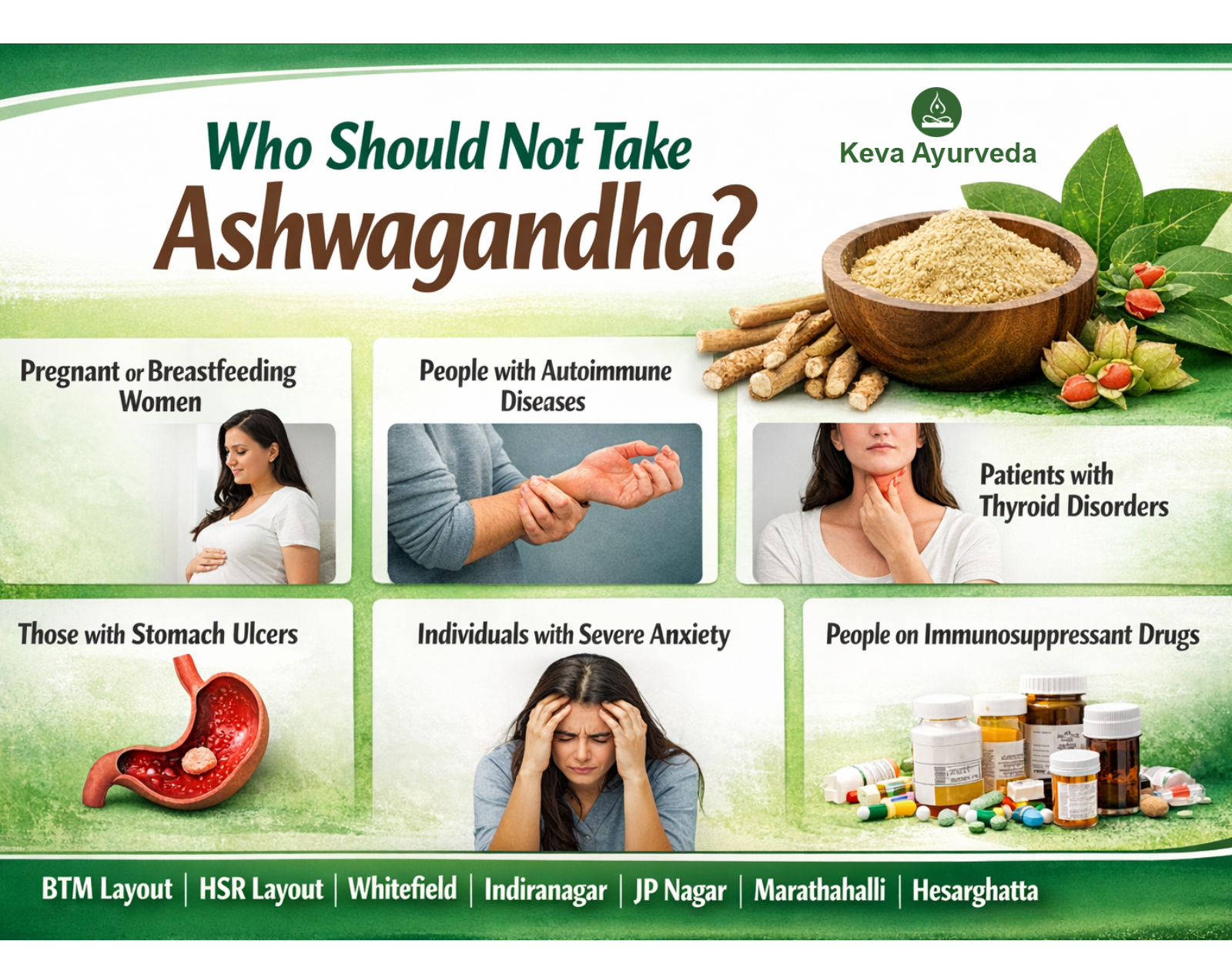
1. Expectant and Nursing Mothers
In Ayurvedic medicine, Ashwagandha is highly potent. Modern science and traditional wisdom both warn that it may cause uterine contractions, potentially leading to complications during pregnancy. Similarly, due to a lack of safety data for infants, it is best avoided while breastfeeding.
2. Individuals with Autoimmune Disorders
Ashwagandha is a powerful immunity booster. However, for those with conditions like Rheumatoid Arthritis (RA), Lupus (SLE), or Multiple Sclerosis, a hyper-active immune system can worsen symptoms. Our experts at Keva Ayurveda recommend specialized Panchakarma in Bangalore for such conditions instead of self-medicating with herbs.
3. People with Hyperthyroidism
While Ashwagandha is excellent for hypothyroidism (underactive thyroid), it can increase thyroid hormone production. If you already have an overactive thyroid (hyperthyroidism), taking this herb may push your hormone levels into a dangerous zone.
4. Patients Scheduled for Surgery
Ashwagandha has a mild sedative effect on the central nervous system. When combined with anesthesia, it can slow down the body too much. We advise patients to stop taking the herb at least two weeks before any scheduled surgery.
5. Those with Peptic Ulcers or Severe Pitta Imbalance
From an Ayurvedic perspective, Ashwagandha is Ushna (warm) in nature. For individuals suffering from stomach ulcers or high Pitta, it may cause gastrointestinal irritation, diarrhea, or acidity.
6. People on Specific Medications
Ashwagandha can interact with several modern drugs, potentially causing adverse effects:
- Diabetes Medication: It may drop blood sugar levels too low.
- Blood Pressure Meds: It can cause a sudden dip in hypertension.
- Immunosuppressants: It may counteract the effects of the medication.
- Sedatives: It can increase extreme drowsiness.
Why Professional Guidance Matters
At Keva Ayurveda, we don’t just treat symptoms; we understand your Prakriti (body constitution). Self-prescribing Ashwagandha can lead to an imbalance in your Doshas. Our certified Ayurveda practitioners provide personalized treatment plans that ensure you get the benefits of Ayurveda without the risks.
Experience Holistic Healing at Keva Ayurveda
As a leading Ayurveda hospital in Bangalore, we offer a one-stop Ayurveda solution:
- Authentic Panchakarma: Detoxify your body safely under expert supervision.
- Specialized Clinics: Solutions for PCOS, Infertility, Arthritis, and Stress Management.
- Insurance & Cashless Care: Available at our BTM Layout branch for hassle-free treatment.
- Online Consultation: Accessible Ayurvedic doctors available pan-India via our website.
Consult the Experts Today
Don’t guess your health—know it. Whether you need a relaxing Abhyangam or a clinical consultation for chronic issues, Keva Ayurveda is your trusted partner.
Contact Keva Ayurveda:
Website: www.kevaayurveda.com
Phone/WhatsApp: +91 8050080058
Our Centers: BTM Layout | HSR Layout | Whitefield | Indiranagar | JP Nagar | Marathahalli | Hesarghatta
(27-03-2026)