You went for a routine check-up and the ultrasound reads “Grade 1 fatty liver.” Your SGOT and SGPT are mildly elevated, your doctor suggests lifestyle changes, and you are wondering whether there is a natural, time-tested approach that actually works. You are not alone — NAFLD, now reclassified as MASLD (metabolic dysfunction-associated steatotic liver disease), affects over a third of adults globally, and India’s numbers are climbing fastest. The good news is that clinical research increasingly supports what Ayurvedic physicians have practised for centuries: a structured Ayurvedic remedy for fatty liver reversal combining hepatoprotective herbs, diet correction, Panchakarma detox, and daily yoga can produce measurable improvement. This guide walks you through the complete protocol.
TL;DR / Quick Answer
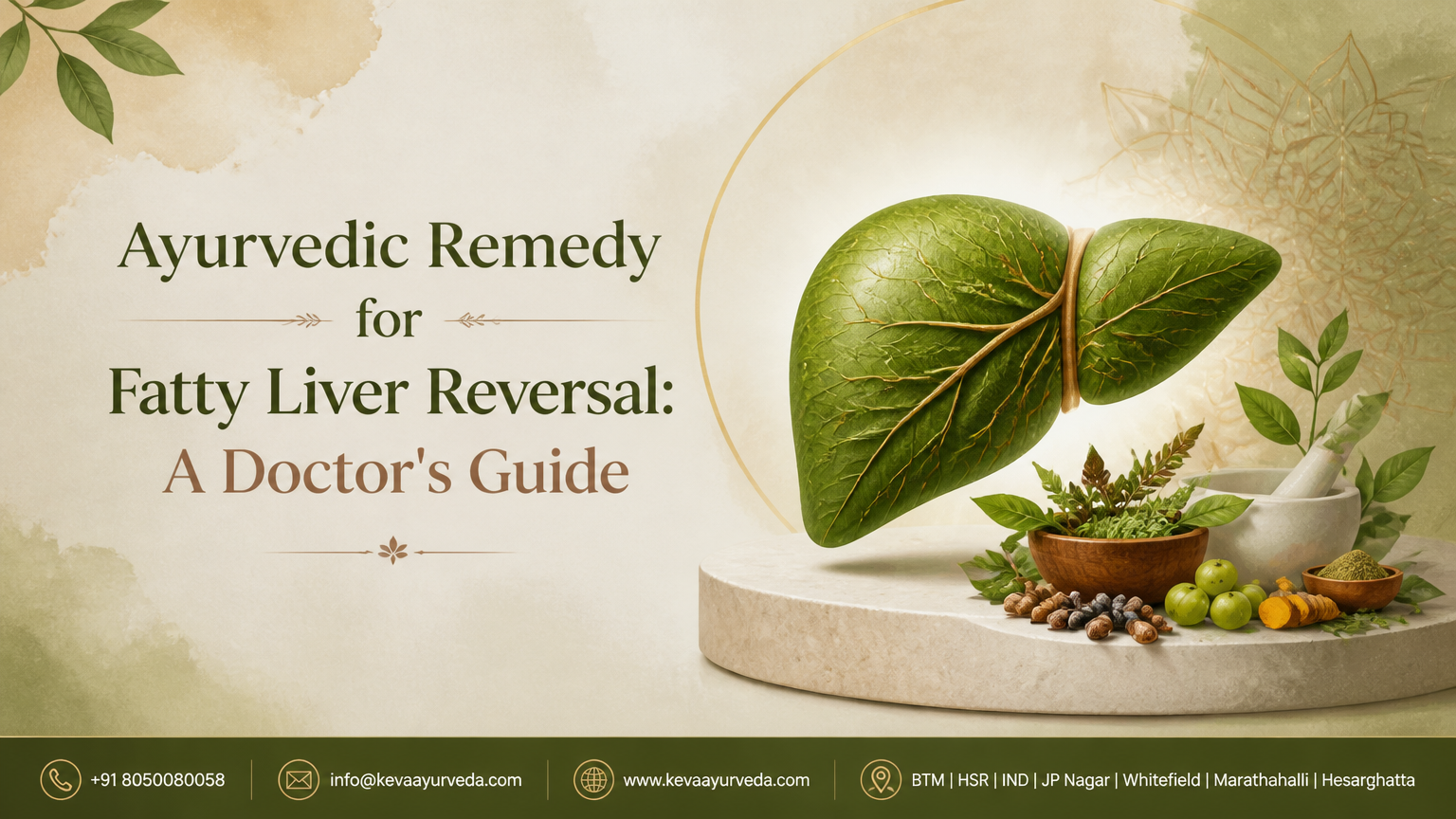
Fatty liver — called Yakrit Roga in Ayurveda — results from aggravated Pitta and Kapha doshas filling liver channels with Ama (metabolic toxins). The most effective Ayurvedic remedy for fatty liver reversal pairs hepatoprotective herbs such as Kutki, Bhumi Amla, and Turmeric with a Pitta-pacifying Indian diet, Panchakarma detox, and daily yoga. Published 2025 research confirms measurable liver fat reduction within 8–12 weeks under qualified medical supervision. Grade 1 cases respond quickest; Grades 2–3 require a longer, doctor-guided protocol.
Table of Contents
- What Is Fatty Liver and Why Is It Rising in India?
- Ayurvedic View: Yakrit Roga and Dosha Imbalance
- Grade-Wise Fatty Liver: Symptoms, LFT Ranges, and Risk
- Top 10 Ayurvedic Herbs for Fatty Liver — Dosage and Evidence
- Indian Diet Plan for Fatty Liver Reversal
- Panchakarma, Yoga, and Daily Routine for Liver Healing
- Safety: Herb-Drug Interactions and When to Avoid
- 90-Day Reversal Plan and LFT Tracking Checklist
- Expert Insights
- FAQs
What Is Fatty Liver and Why Is It Rising in India?
Fatty liver (hepatic steatosis) develops when excess triglycerides accumulate inside hepatocytes, gradually impairing the organ’s ability to metabolise fats and filter toxins. It broadly divides into alcoholic fatty liver disease (AFLD) and non-alcoholic fatty liver disease (NAFLD/MASLD); the latter is driven by insulin resistance, central obesity, a high-refined-carbohydrate diet, and sedentary habits.
A 2025 report in Nature Reviews Gastroenterology & Hepatology found MASLD now affects roughly 38 percent of the global adult population — up from 25 percent a decade earlier — with the steepest rise documented in South Asia. India’s urban prevalence ranges from 25 to 40 percent, and people in their late twenties are increasingly diagnosed. Sedentary desk jobs, frequent fried food consumption, irregular meals, chronic stress, and poor sleep are the primary drivers. For Indians seeking natural interventions alongside medical guidance, Keva Ayurveda – Best Ayurveda Clinic in Bangalore offers structured Ayurvedic programmes addressing the root metabolic imbalances behind liver fat accumulation.
Ayurvedic View: Yakrit Roga and Dosha Imbalance
In Ayurveda the liver is called Yakrit and is considered the primary seat of Ranjaka Pitta — the sub-dosha responsible for blood quality and haemoglobin metabolism. When Pitta is aggravated by excessive spicy and oily food, irregular eating, daytime sleeping, and chronic emotional stress, it triggers Yakrit Roga. Weakened digestion simultaneously produces Ama (metabolic toxins) that clog the liver’s micro-channels (Rasa and Raktavaha Srotas), causing fat deposition, sluggish bile flow, and progressive hepatomegaly.
Ayurveda classifies fatty liver under Medoroga Yakrit Vikara or Pliha Yakrit Vriddhi depending on the dominant dosha. Accurate Prakriti (constitution) and Vikriti (current imbalance) assessment determines which herbs and therapies will work best for you. Clinics such as Keva Ayurveda — India’s first NABH Panchakarma-accredited Ayurveda clinic conduct detailed dosha analysis before prescribing individualised herbal and Panchakarma protocols, ensuring the treatment matches your unique constitutional pattern rather than applying a generic remedy.
Grade-Wise Fatty Liver: Symptoms, LFT Ranges, and Risk
Fatty liver is graded by ultrasound into three stages. Understanding your grade guides treatment intensity and sets realistic expectations for reversal timelines.
| Grade | Ultrasound Finding | Typical Symptoms | ALT (SGPT) Range | Reversibility |
|---|---|---|---|---|
| Grade 1 | Slight diffuse echogenicity | Often asymptomatic; mild bloating | 30–60 U/L | High — diet + herbs often sufficient |
| Grade 2 | Increased echogenicity, vessel blurring | Fatigue, dull right-abdomen ache | 60–120 U/L | Moderate — structured protocol needed |
| Grade 3 | Marked echogenicity, poor beam penetration | Significant fatigue, hepatomegaly | >120 U/L | Challenging — intensive Panchakarma essential |
Key LFT markers to track: SGOT (AST), SGPT (ALT), GGT, alkaline phosphatase (ALP), triglycerides, and fasting insulin. Repeat tests every 8–12 weeks to objectively gauge progress. Ayurveda does not replace specialist medical care — if LFTs are dramatically elevated or fibrosis signs appear on imaging, consult a hepatologist before beginning any herbal protocol.
Top 10 Ayurvedic Herbs for Fatty Liver — Dosage and Evidence
These herbs form the core of most Ayurvedic fatty liver reversal formulations. Dosages below are conventional ranges; a qualified physician should personalise them to your dosha, weight, and grade.
| # | Herb (Sanskrit / Common) | Key Action | Typical Dosage |
|---|---|---|---|
| 1 | Kutki (Picrorhiza kurroa) | Hepatoprotective, cholagogue | 250–500 mg extract, twice daily |
| 2 | Bhumi Amla (Phyllanthus niruri) | Reduces hepatic fat, hepatoprotective | 500 mg extract or 1–3 g decoction, twice daily |
| 3 | Turmeric / Haridra (Curcuma longa) | Anti-inflammatory, anti-steatotic | 500–1000 mg curcuminoid extract daily |
| 4 | Kalmegh (Andrographis paniculata) | Cholagogue, bitter tonic | 500 mg extract, twice daily |
| 5 | Triphala | Gentle detox, gut-liver axis support | 3–6 g powder at bedtime with warm water |
| 6 | Sharpunkha (Tephrosia purpurea) | Spleen-liver tonic | 500 mg extract, twice daily |
| 7 | Bhringaraj (Eclipta alba) | Liver-cell regeneration | 500 mg extract daily |
| 8 | Guduchi / Giloy (Tinospora cordifolia) | Immunomodulator, hepatoprotective | 500 mg–1 g extract, twice daily |
| 9 | Kasani / Chicory (Cichorium intybus) | Bile stimulant | 3–5 g root decoction daily |
| 10 | Amla (Emblica officinalis) | Antioxidant, lipid-lowering | 3–6 g powder daily |
A 2025 systematic review and meta-analysis in Frontiers in Nutrition confirmed curcuminoid supplementation reduced hepatic fat content by 30–40 percent over 8–12 weeks, particularly when combined with dietary changes. Separately, research from the All India Institute of Ayurveda (AIIA) in collaboration with AIIMS demonstrated that integrated protocols using Triphala, Bhumi Amla, and Panchakarma reversed steatosis in Grade 1–2 MASLD patients over 12 weeks, as confirmed by FibroScan and MRI-PDFF imaging.
Indian Diet Plan for Fatty Liver Reversal
Herbs alone cannot reverse fatty liver without correcting dietary triggers. Ayurveda recommends a Pitta-Kapha pacifying diet — warm, light, mildly spiced, and rich in bitter and astringent tastes.
3-Day Sample Indian Vegetarian Meal Plan:
| Day | Breakfast | Lunch | Dinner |
|---|---|---|---|
| Mon | Moong dal chilla + mint chutney | Brown rice + lauki sabzi + dal | Khichdi + karela raita |
| Tue | Oats upma with vegetables | Roti + palak dal + cucumber salad | Barley soup + ridge gourd |
| Wed | Sprouts + amla chutney | Jeera rice + bhindi + buttermilk | Moong dal + lauki soup |
Include: Bitter gourd (karela), amla, barley, turmeric, cumin, coriander, ginger, and warm water sipped throughout the day.
Avoid: Deep-fried food, refined sugar, maida products, cold drinks, excessive red meat, and alcohol — these are non-negotiable eliminations for liver recovery.
Those needing structured meal guidance alongside weight management can explore the Ayurveda Weight Management programme for personalised dietary planning rooted in Ayurvedic principles.
Panchakarma, Yoga, and Daily Routine for Liver Healing
Panchakarma Therapies
Panchakarma — Ayurveda’s five-fold detoxification system — is central to clearing Ama from the liver and rekindling Agni (digestive fire). The most relevant therapies for fatty liver are Virechana (therapeutic purgation, first-line for Pitta disorders), Basti (medicated enema regulating Vata-Pitta and the gut-liver axis), and Abhyanga with Swedana (oil massage plus steam therapy mobilising subcutaneous fat). These must be performed under supervision after proper Purvakarma (preparation phase). Panchakarma Treatment at Keva Ayurveda offers both inpatient (12–21 day) and outpatient options guided by qualified physicians.
Yoga and Pranayama
Specific practices complement the protocol by reducing visceral fat, improving insulin sensitivity, and massaging the hepatic region:
- Kapalbhati Pranayama (5 min) — stimulates Agni, improves digestion.
- Nadi Shodhana (5 min) — balances doshas, reduces cortisol.
- Ardha Matsyendrasana — seated twist that compresses the liver.
- Bhujangasana and Dhanurasana — improve hepatic blood circulation.
Dinacharya (Daily Routine)
Rise before 6 a.m., eat the largest meal between 10 a.m. and 2 p.m. when digestive fire peaks, avoid daytime sleeping, and finish dinner by 7 p.m. This simple rhythm aligns the liver’s circadian processing with natural Agni cycles.
Safety: Herb-Drug Interactions and When to Avoid
Natural does not mean risk-free. Combining Ayurvedic herbs with allopathic medication without guidance can produce adverse interactions.
- Metformin + Turmeric: Both lower blood sugar — combined use risks hypoglycaemia. Monitor fasting glucose regularly and consult both your allopath and Ayurvedic physician.
- Statins + Kutki / Bhumi Amla: Both affect liver enzyme pathways; unexpected LFT fluctuations may occur.
- Blood Thinners + Curcumin: Turmeric has mild anti-platelet activity; avoid high doses alongside warfarin or aspirin.
- Pregnancy / Lactation: Kutki, Kalmegh, and Panchakarma purgation are contraindicated. Declare pregnancy status during consultation.
- Advanced Fibrosis / Cirrhosis: Herbal therapy alone cannot reverse established fibrosis and must not replace specialist hepatology care.
Always disclose every current medication to your Ayurvedic doctor. Supervised programmes at accredited clinics — with scheduled blood work and personalised protocol design — ensure safe herb-allopathy integration. You can read patient success stories at Keva Ayurveda to understand what supervised treatment journeys typically involve.
90-Day Reversal Plan and LFT Tracking Checklist
Random herbal experimentation wastes time. A phased roadmap ensures measurable results.
Phase 1 — Baseline (Days 1–7): Complete a full LFT panel (SGOT, SGPT, GGT, ALP, triglycerides, fasting insulin) and an abdominal ultrasound or FibroScan. Consult a qualified Ayurvedic physician for Prakriti assessment. Eliminate alcohol, fried food, refined sugar, and carbonated drinks entirely.
Phase 2 — Active Protocol (Days 8–60): Begin the prescribed herbal combination — typically Kutki + Bhumi Amla + Triphala as a base formulation with Turmeric as an adjunct. Undergo Panchakarma Virechana or Basti in weeks 3–4 if advised. Practise the prescribed asanas and pranayama daily for at least 30 minutes. Follow the Pitta-Kapha diet strictly.
Phase 3 — Consolidation (Days 61–90): Repeat LFTs and imaging. Adjust the herbal protocol based on objective results. Transition to a maintenance dose of Triphala and Amla. Continue diet and yoga long-term to prevent relapse.
| Milestone | Expected Progress |
|---|---|
| End of Month 1 | Improved digestion, reduced bloating, energy uptick |
| End of Month 2 | ALT/SGPT improvement, noticeably reduced fatigue |
| End of Month 3 | Ultrasound shows grade reduction or stable improvement; LFTs normalising |
To begin a personalised reversal programme, book an Ayurveda consultation online or call +91-8050080058 between 8 a.m. and 8 p.m. any day of the week.
Expert Insights
1. Herb Synergy Outperforms Single Herbs
Clinical Ayurvedic practice consistently shows that formulations combining a cholagogue (Kutki), a hepatoprotective antioxidant (Bhumi Amla), and a gut-liver axis regulator (Triphala) outperform any individual herb. Random self-supplementation with a single herb rarely delivers the results a layered protocol can.
2. The Gut-Liver Axis Is the Missing Piece
Emerging research links gut dysbiosis directly to hepatic fat accumulation. Ayurveda’s emphasis on Agni correction through Triphala and Basti therapy aligns precisely with this modern science — improve the gut, and the liver follows.
3. Meal Timing Matters As Much As Food Choice
Late-night eating, a widespread habit among urban Indians, forces the liver to process fats during its circadian rest phase. Shifting dinner before 7 p.m. is frequently the single most impactful change a patient can make.
4. Track Progress — Do Not Guess
Feeling better within weeks tempts many patients to stop treatment early. Retesting LFTs at 30, 60, and 90 days prevents the “improved → stopped early → relapsed” cycle that affects the majority of self-treated patients.
Conclusion
Fatty liver is reversible in its early stages, and Ayurveda offers a structured, time-tested framework to support that process. From Kutki, Bhumi Amla, and Turmeric to Panchakarma detox, a Pitta-Kapha pacifying diet, and daily yoga — each layer of the protocol addresses a specific mechanism of liver fat accumulation. The critical factor is medical supervision: a qualified Ayurvedic physician personalises herb selection, adjusts dosages, tracks LFT progress, and ensures safety alongside any ongoing allopathic medications. For a personalised assessment, you can book an Ayurveda consultation online or call +91-8050080058 for tailored fatty liver guidance.
FAQs
Q1: What is the best Ayurvedic remedy for fatty liver reversal?
The most effective approach combines hepatoprotective herbs (Kutki, Bhumi Amla, Turmeric), a Pitta-pacifying diet, Panchakarma detox, and daily yoga under a qualified practitioner’s supervision — no single herb alone achieves reliable results.
Q2: Can Ayurvedic herbs reverse fatty liver completely?
In Grades 1 and 2, consistent use of the right herbal formulations alongside diet and lifestyle changes has shown measurable improvement over 8–12 weeks in published clinical trials. Grade 3 requires longer, supervised treatment and may not fully reverse.
Q3: How long does it take to reverse fatty liver with Ayurveda?
Most structured protocols span 90 days. Initial LFT improvement often appears within 4–6 weeks; ultrasound-confirmed structural improvement typically requires the full 12 weeks of consistent treatment.
Q4: Is Turmeric proven to help fatty liver?
Yes. A 2025 meta-analysis in Frontiers in Nutrition confirmed that standardised curcuminoid supplementation significantly reduced hepatic fat content and liver enzyme levels over 8–12 weeks.
Q5: Can I take Ayurvedic herbs alongside allopathic medicines?
Some combinations are safe; others require monitoring. Turmeric may amplify metformin’s blood-sugar-lowering effect. Always disclose all current medications to your Ayurvedic physician before starting any herbal programme.
Q6: What foods should I eat and avoid for fatty liver?
Favour bitter gourd, amla, barley, turmeric, cumin, and warm cooked meals. Avoid deep-fried foods, refined sugar, maida, cold drinks, alcohol, and heavy red meat — these are non-negotiable eliminations.
Q7: Is Panchakarma necessary for fatty liver reversal?
Not always, but therapies like Virechana (purgation) and Basti (medicated enema) significantly accelerate detox and liver restoration, particularly for Grade 2 and 3 patients. Consult an experienced Ayurvedic physician to determine suitability.
For more wellness insights, explore the Keva Ayurveda wellness blogs.