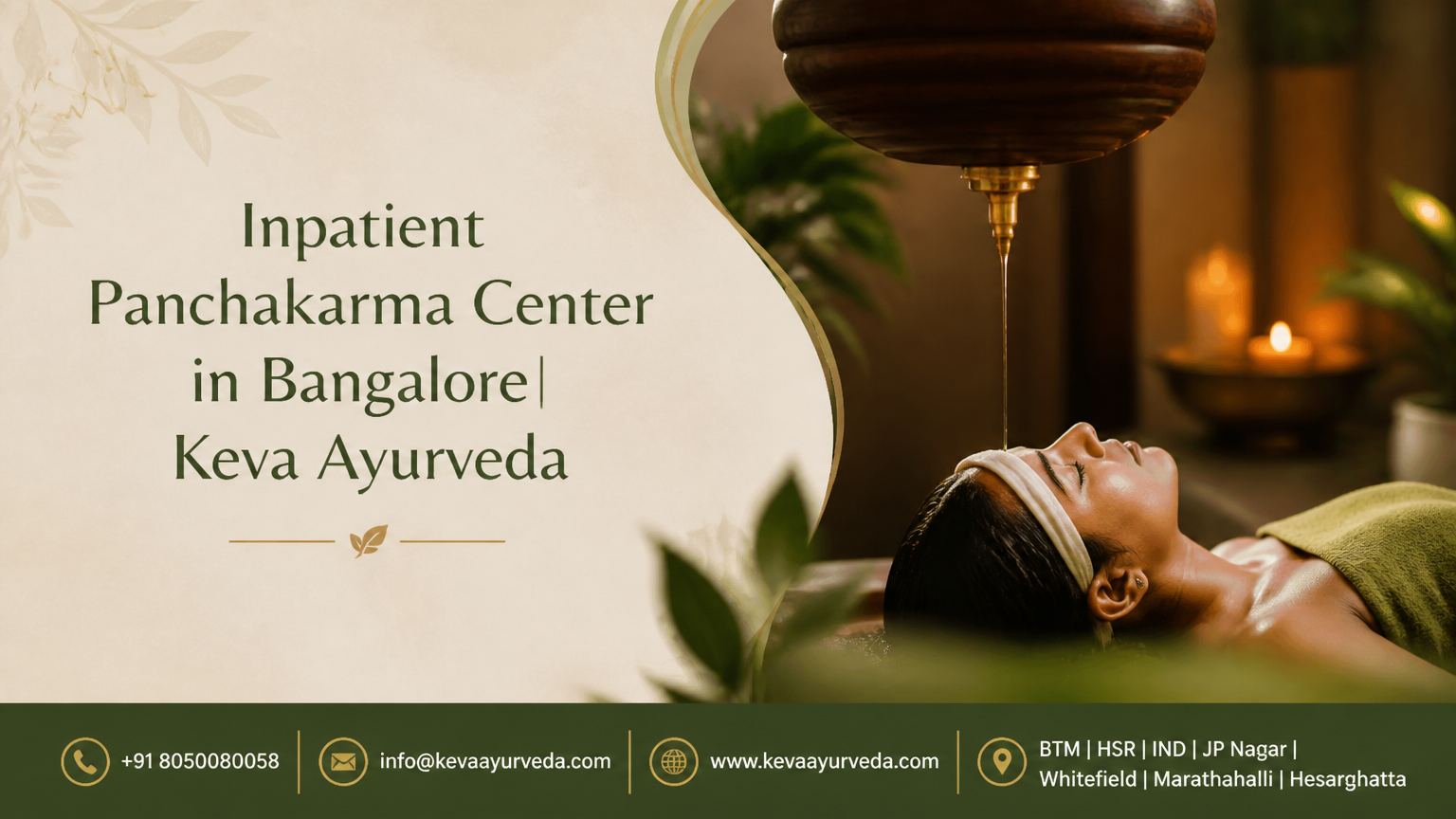
Bangalore’s fast-paced lifestyle — long commutes, desk-bound work, chronic stress — has driven a sharp rise in lifestyle conditions that short outpatient visits simply cannot address. For patients dealing with persistent back pain, hormonal imbalances, digestive disorders, or skin conditions that have resisted conventional treatment, a residential Panchakarma program offers something fundamentally different: continuous physician supervision, structured multi-day detox, and a controlled healing environment.
But choosing the right inpatient Panchakarma center in Bangalore is not straightforward. Accreditation status, treatment duration, room types, insurance coverage, and post-treatment protocols vary widely across facilities. This guide walks through everything you need — from understanding what “inpatient” means in Ayurveda to comparing costs, coverage, and admission steps — so you can make an informed decision.
TL;DR / Quick Answer
An inpatient Panchakarma center in Bangalore provides residential, physician-supervised Ayurveda detox programs lasting 7 to 21 days, with daily therapies, monitored meals, and structured recovery protocols. NABH-accredited facilities ensure clinical safety standards, and several centers offer cashless insurance coverage. Packages for 12–15-day residential programs generally start from ₹11,999 to ₹15,999, depending on the condition and prescribed therapies.
Table of Contents
- Why Bangalore is a Hub for Inpatient Panchakarma Therapy
- How to Choose the Right Inpatient Panchakarma Center in Bangalore
- What Inpatient Panchakarma Really Means: OP vs IP
- Cost of Inpatient Panchakarma in Bangalore (7, 14 & 21-Day Packages)
- Conditions Treated with Residential Panchakarma Programs
- Admission Process, Room Types & What to Pack
- Insurance & Cashless Coverage for Inpatient Panchakarma
- Post-Treatment Rasayana, Diet & Follow-Up Protocol
- FAQs on Inpatient Panchakarma in Bangalore
Why Bangalore is a Hub for Inpatient Panchakarma Therapy
Bangalore’s position as a leading destination for residential Panchakarma is no accident. The city hosts some of Karnataka’s most established Ayurveda hospitals and NABH-accredited treatment centers, supported by a growing infrastructure of inpatient care. According to hospital data from the Rajiv Gandhi Institute of Ayurveda (RIA) Karnataka, the Panchakarma department recorded 15,965 OPD consultations and 590 inpatient admissions in 2025 alone — evidence that residential Panchakarma is a high-volume, established clinical service in the state, not a niche wellness offering (RIA Karnataka Hospital Report, 2025).
The clinical case for inpatient care is equally compelling. A retrospective study published in the Journal of Ayurveda and Integrated Medical Sciences (JAIMS) found that Type 2 Diabetes patients who completed a structured 90-day Panchakarma-based program saw HbA1c drop from 8.28% to 6.55%, with improvement largely sustained at 6.74% after one year of follow-up. Results like these are difficult to replicate through sporadic outpatient visits, which is why Bangalore patients with chronic metabolic, musculoskeletal, and hormonal conditions increasingly prefer residential programs. The city also benefits from a dense network of qualified Ayurveda physicians and branch-based accessibility across key neighborhoods — from BTM Layout to Whitefield — making Keva Ayurveda – NABH Accredited Inpatient Panchakarma Center in Bangalore accessible regardless of where a patient lives.
How to Choose the Right Inpatient Panchakarma Center in Bangalore
Not every facility offering Panchakarma in Bangalore qualifies as a genuine inpatient center. The distinction matters because therapies like Vamana (therapeutic emesis), Virechana (purgation), and Basti (medicated enema) often require overnight monitoring that cannot be safely managed in a day-care clinic. The National Accreditation Board for Hospitals and Healthcare Providers (NABH) explicitly states that Panchakarma clinics “should provide those services which do not require overnight stay,” and that when overnight observation is needed, patients must be transferred to an Ayurveda hospital (NABH Panchakarma Clinic Accreditation Standards, 1st Edition). For patients seeking residential care, this means prioritizing NABH-accredited Ayurveda hospitals.
Beyond accreditation, look for centers that offer structured multi-day packages, physician-supervised daily assessment, diet customization during the stay, and a clear post-treatment Rasayana protocol. Ask whether the center provides pre-admission consultation to assess your Prakriti (constitution) and Vikriti (imbalance) before committing. Keva Ayurveda — India’s first NABH-accredited Ayurveda company — combines NABH Panchakarma accreditation with structured residential programs and transparent patient feedback. Reviewing patient testimonials before deciding is a smart way to gauge clinical outcomes and service quality.
What Inpatient Panchakarma Really Means: OP vs IP
The terms “outpatient Panchakarma” and “inpatient Panchakarma” describe fundamentally different treatment experiences. Outpatient (OP) Panchakarma involves visiting the clinic for individual therapy sessions — Abhyangam, Shirodhara, Nasyam, or localized treatments like Kati Basti — and returning home the same day. This model works well for maintenance therapies, stress relief, or mild conditions not requiring intensive detox.
Inpatient (IP) Panchakarma is a residential program where the patient stays at the facility for the entire treatment duration — typically 7, 12, 15, or 21 days. Every aspect of care is managed on-site: daily physician assessment, scheduled therapies, monitored meals aligned to your dosha balance, supervised rest, and overnight observation after intensive procedures. NABH standards mandate that any Panchakarma procedure requiring overnight observation must be delivered through an Ayurveda hospital. For patients with chronic conditions that have not responded to outpatient care, Keva Ayurveda Panchakarma Treatment provides the sustained therapeutic intensity and clinical monitoring residential programs demand.
Cost of Inpatient Panchakarma in Bangalore (7, 14 & 21-Day Packages)
Inpatient Panchakarma costs in Bangalore vary based on the facility’s accreditation status, room type, treatment duration, and therapies prescribed. Patients should expect the total cost to include several components: initial physician consultation, daily therapy sessions, accommodation, meals, and supportive herbal medications. At NABH-accredited centers, Panchakarma treatment packages generally start from ₹11,999 to ₹15,999 for 12 to 15-day residential programs, with exact pricing depending on the patient’s condition and prescribed therapies.
Here is a general cost framework:
| Component | Estimated Range |
|---|---|
| Initial Physician Consultation | ₹500 – ₹1,000 |
| 12–15 Day Inpatient Package | Starting from ₹11,999 – ₹15,999 |
| 21-Day Residential Program | Varies by condition & therapies |
| Individual Therapy Sessions | ₹1,499 per session (e.g., Abhyangam, Shirodhara) |
| Herbal Medicines | Included or additional |
| Accommodation & Meals | Included in package |
All prices are indicative and subject to physician assessment of your specific condition. Longer 21-day programs, which include an intensive Rasayana phase, may be priced higher. Insurance coverage can significantly reduce out-of-pocket costs — a factor discussed in detail below.
Conditions Treated with Residential Panchakarma Programs
Inpatient Panchakarma is a structured clinical intervention for specific chronic conditions that require sustained, supervised treatment. Musculoskeletal conditions such as chronic lower back pain, cervical spondylosis, osteoarthritis, and frozen shoulder benefit from daily Basti protocols and localized therapies delivered under continuous monitoring. Patients with spinal and joint issues can explore dedicated approaches through spine and joint care Panchakarma therapies.
Metabolic and hormonal conditions — Type 2 Diabetes, thyroid disorders, PCOS, and obesity — respond well to multi-day Virechana and Basti protocols combined with dietary regulation. The JAIMS study demonstrated lasting HbA1c improvements in diabetic patients over one year. Infertility is another area where residential Panchakarma has shown clinical promise, with programs typically spanning 3 to 9 months. Learn more about Ayurveda Panchakarma programs for infertility management. Dermatological conditions like psoriasis and chronic eczema often require the intensive Vamana-Virechana combination best administered in an inpatient setting. Weight management through Udwartana-based detox Panchakarma also benefits from residential monitoring.
Admission Process, Room Types & What to Pack
Understanding the admission process helps patients prepare logistically for their residential stay. Most NABH-accredited centers follow a standardized protocol. Pre-admission consultation is the first step — a qualified physician evaluates your Prakriti, Vikriti, medical history, and current medications to determine if inpatient Panchakarma is appropriate and which therapies to prescribe. Duration selection follows: based on the assessment, you will be advised 12, 15, or 21 days depending on condition severity and the procedures needed.
Room options typically range from shared to private single-occupancy. During the stay, patients follow a structured schedule: morning therapies, prescribed meals, afternoon sessions, evening medication, and supervised rest. What to pack: comfortable loose cotton clothing, personal toiletries, current prescription medications (to be reviewed by the attending physician), reading material, and a journal. Avoid carrying caffeine, processed snacks, or outside food — diet during the stay is strictly regulated. To begin the process or discuss your condition, you can book a Panchakarma admission consultation at Keva Ayurveda’s coordination team.
Insurance & Cashless Coverage for Inpatient Panchakarma
One of the most common questions before booking inpatient Panchakarma in Bangalore is whether insurance covers the cost. The answer is increasingly yes — provided the facility is accredited and the treatment qualifies as inpatient care. NABH-accredited centers in Bangalore now offer cashless insurance facilities. Keva Ayurveda, for example, accepts cashless coverage through ACKO, Navi, Aditya Birla, SBI General, ICICI Lombard, and ManipalCigna, along with TPAs including FHPL, Vidal, Paramount, and Vipul MedCorp.
Eligibility typically depends on three factors: whether the program qualifies as inpatient treatment (not day-care), whether the facility holds NABH accreditation, and whether your policy includes AYUSH coverage. Since IRDAI mandated AYUSH inclusion under health insurance, coverage for Ayurveda inpatient care has expanded significantly. To maximize your benefit, verify AYUSH coverage in your policy, check the insurer’s empanelled hospital list, request pre-authorization before admission, and obtain a detailed cost estimate from the center’s coordinator for insurer submission. Call ahead to discuss insurance options before committing.
Post-Treatment Rasayana, Diet & Follow-Up Protocol
Completing an inpatient Panchakarma program is the foundation for what comes next. The post-treatment phase, known as Rasayana (rejuvenation), is where residential detox gains are consolidated. During the inpatient stay, Panchakarma clears accumulated Ama (toxins) from deep tissues and restores dosha balance. However, the body remains in a sensitive state after discharge — without proper follow-up, benefits can diminish within weeks.
Diet protocol: For 4 to 6 weeks post-discharge, follow a light, warm, easily digestible diet — rice kanji, moong dal, cooked vegetables, and herbal teas. Avoid raw salads, cold foods, fried items, and processed meals. Rasayana herbs: Your physician will prescribe formulations based on your condition — Ashwagandha for vitality, Guduchi for immunity, Shatavari for hormonal balance, or Triphala for digestion. Follow-up consultations are critical: most centers recommend a review 2 to 4 weeks after discharge, then monthly check-ins for 3 to 6 months. Staying informed through the Keva Ayurveda blog — Panchakarma and wellness articles helps patients maintain treatment gains long after their residential stay ends.
FAQs on Inpatient Panchakarma in Bangalore
1. What is an inpatient Panchakarma center in Bangalore?
An inpatient Panchakarma center is an Ayurveda hospital or accredited facility that offers residential detox programs lasting 7 to 21 days, with daily physician-supervised therapies, monitored meals, and overnight observation for intensive procedures.
2. How long does an inpatient Panchakarma program last?
Most residential programs in Bangalore run for 12, 15, or 21 days depending on the patient’s condition. Some centers also offer shorter 7-day wellness programs.
3. Is inpatient Panchakarma covered by health insurance?
Yes. Several NABH-accredited Ayurveda hospitals in Bangalore accept cashless insurance through major insurers and TPAs, provided your policy includes AYUSH coverage.
4. What conditions can be treated with inpatient Panchakarma?
Residential Panchakarma is recommended for chronic arthritis, lower back pain, diabetes, PCOS, infertility, psoriasis, obesity, and digestive disorders that have not responded adequately to outpatient care.
5. What is the difference between inpatient and outpatient Panchakarma?
Inpatient Panchakarma involves a residential stay with 24-hour supervision, while outpatient Panchakarma involves visiting the clinic for individual therapy sessions and returning home the same day.
6. How much does inpatient Panchakarma cost in Bangalore?
Packages generally start from ₹11,999 to ₹15,999 for 12–15-day residential programs. Exact costs depend on the condition, prescribed therapies, and duration. All pricing is subject to physician assessment.
7. Can inpatient Panchakarma help with infertility?
Yes. Accredited centers offer structured Panchakarma programs for both male and female infertility, typically combining an initial inpatient detox phase with ongoing outpatient Rasayana support over 3 to 9 months.
Choosing the right inpatient Panchakarma center in Bangalore comes down to accreditation, clinical supervision, and post-treatment support. With NABH standards governing how residential care should be delivered, patients now have a clear framework for identifying facilities that prioritize safety. Bangalore offers a strong ecosystem of qualified Ayurveda hospitals, and whether you are managing chronic joint pain, hormonal imbalance, or skin conditions, residential Panchakarma provides the sustained therapeutic environment outpatient visits often cannot. If you are ready to explore whether a residential program fits your needs, Keva Ayurveda offers structured inpatient Panchakarma with physician-supervised care and cashless insurance support.