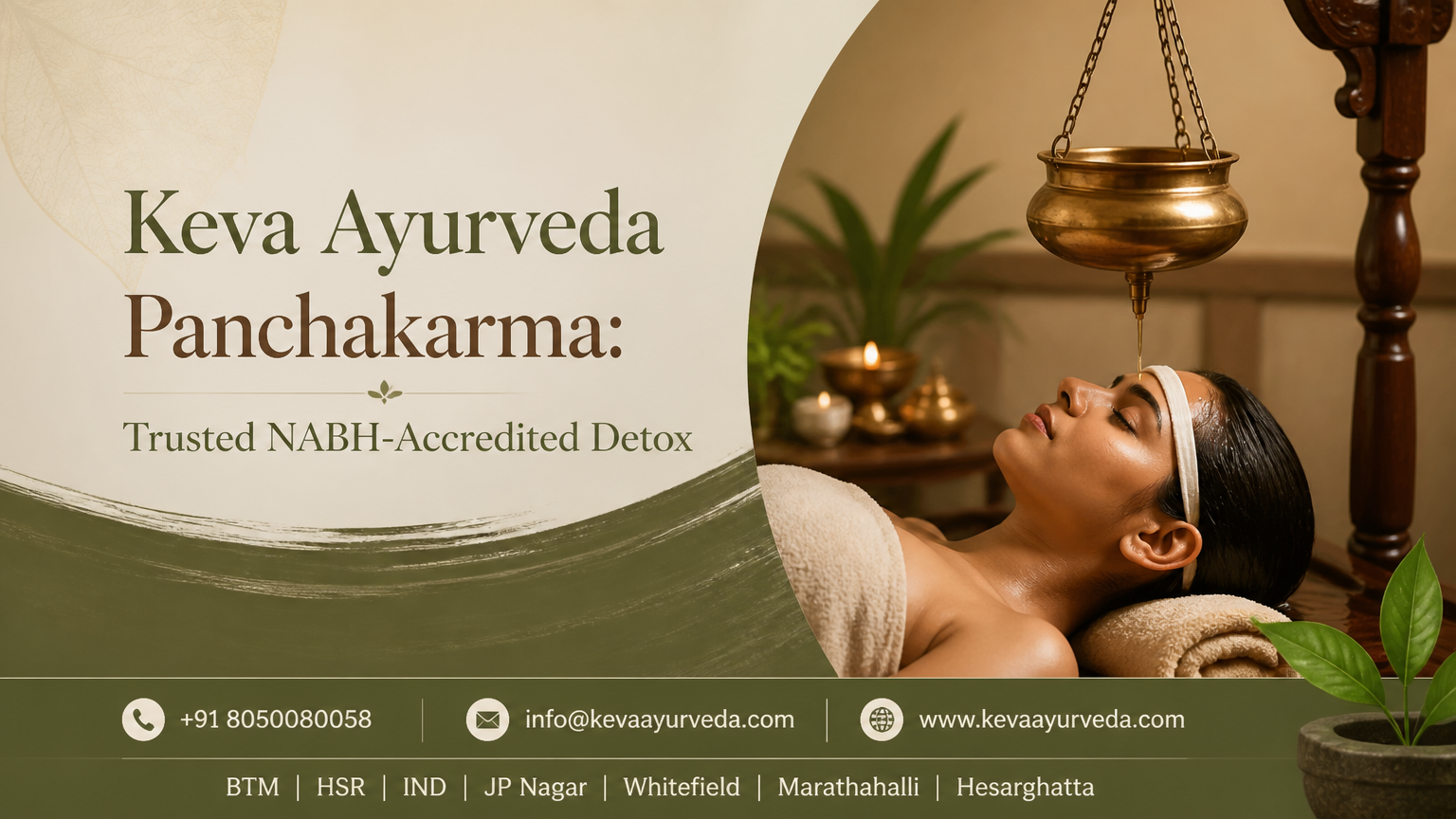
Keva Ayurveda Panchakarma: Trusted NABH-Accredited Detox
Executive Summary & Comprehensive Guide
In the modern clinical landscape, where chronic stress, metabolic disorders, autoimmune flare-ups, and lifestyle-induced toxicities have become the new normal, the ancient science of Ayurveda offers a time-tested, evidence-informed detoxification protocol known as Panchakarma. At Keva Ayurveda, a NABH-accredited Ayurveda clinic operating across seven strategic locations in Bangalore, Panchakarma is delivered not as a luxury spa indulgence but as a rigorous, doctor-supervised medical detoxification therapy rooted in classical Sanskrit texts such as the Charaka Samhita and Sushruta Samhita.
This comprehensive guide is written for health-conscious readers, chronic illness patients, NRIs seeking authentic Ayurvedic care, and integrative medicine practitioners who want clarity on what Panchakarma truly involves, how it works at the cellular and systemic level, what conditions it addresses, and what realistic package costs look like at a NABH-accredited facility. Whether you are battling stubborn Ama (metabolic toxin) accumulation, recovering from long-haul fatigue, managing Sandhigata Vata (osteoarthritis), or simply seeking seasonal Ritucharya-aligned detoxification, this article will serve as your medical reference.
Key Takeaways:
- Panchakarma means “five actions” (Pancha = five, Karma = procedures) — the five classical Shodhana (purification) therapies.
- Keva Ayurveda is NABH accredited, ensuring hospital-grade safety, hygiene, and clinical governance.
- Treatment is doctor-supervised, individualized after Nadi Pariksha (pulse diagnosis) and Prakriti analysis.
- Standard packages range from 7-day introductory detox to 21–28 day classical Panchakarma.
- Online consultation and booking are available across all seven Bangalore branches.
Classical Principles & Medical Foundation
To understand why Panchakarma is considered the cornerstone of Kayachikitsa (internal medicine) in Ayurveda, one must first understand the foundational concepts of Tridosha, Saptadhatu, Trimala, and Srotas.
The Tridosha Framework
According to Ayurvedic physiology, every human being is governed by three biological humors:
- Vata — composed of Vayu (air) and Akasha (ether); governs movement, nerve conduction, and elimination.
- Pitta — composed of Agni (fire) and Jala (water); governs metabolism, digestion, and enzymatic activity.
- Kapha — composed of Jala (water) and Prithvi (earth); governs structure, lubrication, and immunity.
Health is defined as the dynamic equilibrium (Sama Dosha) of these three humors, along with balanced Agni (digestive fire), balanced Dhatu (tissues), and proper elimination of Mala (waste). When this equilibrium is disturbed — by diet, stress, climate, or suppressed emotions — Ama (undigested metabolic toxin) accumulates in the Srotas (micro and macro channels), leading to disease.
What is Panchakarma?
Panchakarma is the radical Shodhana (purification) branch of Ayurveda designed to:
- Loosen and mobilize accumulated Ama and vitiated Dosha from their deep tissue reservoirs (Shakha).
- Transport these toxins to the gastrointestinal tract (Koshtha).
- Eliminate them through the nearest possible orifice using one or more of the five Pradhanakarma (main procedures).
The Five Classical Procedures
| Procedure | Sanskrit Name | Primary Dosha Targeted | Route of Elimination | Clinical Indications |
|---|---|---|---|---|
| 1 | Vamana (Therapeutic Emesis) | Kapha | Upper GI tract (oral) | Asthma, chronic sinusitis, allergic rhinitis, obesity, skin disorders (Kushtha) |
| 2 | Virechana (Therapeutic Purgation) | Pitta | Lower GI tract (anal) | Hepatitis, acne, eczema, migraine, acid peptic disorders, chronic jaundice |
| 3 | Basti (Medicated Enema) | Vata | Colon | Osteoarthritis, sciatica, paralysis, chronic constipation, infertility, neurological disorders |
| 4 | Nasya (Nasal Administration) | Doshas above the clavicle | Nasal mucosa | Sinusitis, migraine, cervical spondylosis, hair fall, memory loss, facial paralysis |
| 5 | Raktamokshana (Bloodletting) | Pitta & blood impurities | Skin / vein | Psoriasis, varicose veins, abscess, chronic skin diseases (Visarpa) |
Step-by-Step Treatment Protocol
At Keva Ayurveda, every Panchakarma protocol follows the classical three-phase structure described in the Charaka Samhita: Purvakarma (preparatory), Pradhanakarma (main procedure), and Paschatkarma (post-treatment convalescence).
Phase 1: Purvakarma (Preparatory Therapies — Days 1 to 5/7)
The goal of Purvakarma is to bring the vitiated Dosha from the periphery (Shakha) to the gastrointestinal tract (Koshtha) so that it can be eliminated. This is achieved through two key sub-therapies:
- Snehana (Oleation Therapy): Internal consumption of medicated ghee (Shodhana Ghrita) such as Mahatikta Ghrita, Panchatikta Ghrita, or Guggulutiktaka Ghrita for 3 to 7 days, followed by external Abhyanga (full-body oil massage) with warm Dhanwantharam Taila, Sahacharadi Taila, or Mahanarayana Taila.
- Swedana (Fomentation Therapy): Application of medicated steam (Bashpa Sweda) using herbs like Dashamoola, Nirgundi, and Tulsi to open the Srotas and liquefy Ama.
At Keva Ayurveda, this phase also includes Shirodhara (oil poured over the forehead), Kati Basti (localized oil retention on the lower back), and Greeva Basti for cervical conditions, depending on the patient’s Vikriti (current imbalance).
Phase 2: Pradhanakarma (Main Procedure — Day 6/8)
After Purvakarma, the physician selects one or more of the five main procedures based on the dominant Dosha involved. For example:
- A patient with chronic allergic rhinitis and Kapha predominance will undergo Vamana using Madanaphala (Randia dumetorum) decoction.
- A patient with chronic Pitta-related skin disorders will undergo Virechana using Trivrit (Operculina turpethum) or Avipathy choorna.
- A patient with Sandhigata Vata will undergo a course of Asthapana (herbal decoction enema) and Anuvasana (oil enema) Basti.
Phase 3: Paschatkarma (Post-Treatment — Days 7 to 14/21)
This is the most critical phase, often underestimated in non-clinical settings. Paschatkarma involves:
- Samsarjana Krama — a graded diet progression from Peya (thin rice gruel) to Vilepi (thick gruel) to Akrita Yusha (unspiced vegetable soup) over 3 to 7 days.
- Rasayana (rejuvenation) — administration of Chyawanprash, Brahmi Ghrita, or Ashwagandha preparations to rebuild Ojas (vital essence).
- Lifestyle counseling on Dinacharya (daily routine) and Ritucharya (seasonal routine).
Clinical Health Benefits
Modern clinical research, including studies published in the Journal of Ayurveda and Integrative Medicine, has validated several benefits of classical Panchakarma. At Keva Ayurveda, the most commonly observed clinical outcomes include:
1. Metabolic & Endocrine Benefits
- Improved insulin sensitivity in Prameha (Type 2 diabetes mellitus and pre-diabetes).
- Reduction in BMI and visceral fat in Sthoulya (obesity).
- Improved lipid profile and reduced hepatic steatosis markers.
2. Musculoskeletal Benefits
- Significant pain reduction in Sandhigata Vata (osteoarthritis) and Gridhrasi (sciatica).
- Improved range of motion in Avabahuka (frozen shoulder) and cervical spondylosis.
- Reduced inflammation in Amavata (rheumatoid arthritis).
3. Neurological & Mental Health Benefits
- Reduction in cortisol levels and perceived stress (validated through Shirodhara and Shiro Basti).
- Improved sleep quality in Anidra (insomnia).
- Symptomatic relief in Apasmara (epilepsy) and Ardita (Bell’s palsy) as adjunct therapy.
- Reduced anxiety scores in generalized anxiety disorder.
4. Dermatological Benefits
- Clearance of lesions in Kushtha (psoriasis, eczema).
- Improved complexion and reduced acne in Mukhadushika.
- Detoxification in chronic urticaria (Sheetapitta).
5. Gastrointestinal Benefits
- Restoration of Agni (digestive fire) in Ajeerna (indigestion) and Grahini (IBS).
- Resolution of chronic constipation through Anuvasana Basti.
- Detoxification of the liver in Kamala (jaundice) and fatty liver.
Package Costs, Insurance & Pricing Clarity
One of the most common concerns among patients is the cost of authentic Panchakarma. At Keva Ayurveda, pricing is transparent, doctor-led, and based on the duration and intensity of therapy required. Below is a representative pricing structure (subject to physician consultation and current clinic rates):
| Package Name | Duration | Includes | Indicative Price (INR) |
|---|---|---|---|
| Swastha Wellness Detox | 3 Days | Abhyanga, Swedana, light diet | ₹6,000 – ₹9,000 |
| Rejuvenation Package | 7 Days | Abhyanga, Swedana, Shirodhara, herbal steam, diet plan | ₹14,000 – ₹22,000 |
| Classical Panchakarma (Vamana/Virechana) | 14 Days | Full Purvakarma, Pradhanakarma, Paschatkarma, doctor consultations, internal medicines | ₹35,000 – ₹55,000 |
| Classical Basti Course (Vata disorders) | 21 Days | Daily Matra Basti or Kashaya Basti, Abhyanga, Swedana, Rasayana | ₹50,000 – ₹75,000 |
| Comprehensive 28-Day Shodhana | 28 Days | Multiple Pradhanakarma, full board, Rasayana, lifestyle counseling | ₹85,000 – ₹1,20,000 |
Insurance & EMI Options
- Selected insurance providers and TPA partners cover inpatient Panchakarma for chronic conditions under AYUSH coverage.
- EMI options are available for packages above ₹30,000 through partner financing agencies.
- Corporate wellness tie-ups and CSR partnerships are accepted at all seven Bangalore branches.
- Government employees can avail CGHS, ECHS, and state AYUSH reimbursement where applicable.
Note: Final pricing depends on the patient’s Prakriti-Vikriti analysis, room category (general ward, semi-private, private), and the specific Shodhana procedures prescribed. A detailed estimate is provided after the initial consultation.
Frequently Asked Questions (FAQs)
1. Is Panchakarma safe for everyone?
When administered by qualified Vaidyas at an NABH-accredited facility like Keva Ayurveda, Panchakarma is generally safe. However, it is contraindicated in pregnancy, active infections, severe cachexia, and certain cardiac conditions. A thorough pre-treatment evaluation is mandatory.
2. How do I know which Panchakarma procedure I need?
Your Vaidya at Keva Ayurveda will perform Nadi Pariksha (pulse diagnosis), Jihva Pariksha (tongue examination), and detailed Prakriti-Vikriti analysis before recommending any procedure.
3. Will I need to take leave from work?
For a 7-day package, most patients can manage with weekend scheduling. For 14 to 28-day classical Panchakarma, a minimum of 7 to 14 days off work is strongly recommended, especially during the Pradhanakarma and Paschatkarma phases.
4. Are the medicines used authentic and classical?
Yes. Keva Ayurveda uses classical formulations prepared in GMP-certified pharmacies, with herbs sourced from authenticated suppliers. Many formulations are prepared in-house following traditional Sneha Kalpana and Kashaya Kalpana methods.
5. Can Panchakarma help with autoimmune conditions?
Yes. Conditions like rheumatoid arthritis (Amavata), psoriasis (Kitibha Kushtha), and Hashimoto’s thyroiditis (managed as Gala Ganda) often respond well to Panchakarma as an adjunct to conventional care.
6. Do you offer online consultations?
Yes. Keva Ayurveda offers online Nadi Pariksha and video consultations for patients across India and abroad. Medicines can be couriered, and lifestyle plans are shared digitally.
7. What dietary restrictions should I follow during treatment?
Patients are advised to follow a Sattvic, easily digestible diet — avoiding dairy, heavy meats, fermented foods, cold beverages, and raw salads during active Shodhana. A personalized diet chart is provided.
8. How soon will I see results?
Many patients report improved energy, better sleep, and reduced bloating within the first week. Chronic conditions like arthritis or psoriasis may require 2 to 3 cycles of Panchakarma over 6 to 12 months for sustained results.
Why Choose Keva Ayurveda (NABH Accredited, 7 Bangalore Locations, Online Booking & Contact Info)
Keva Ayurveda stands apart from commercial spa-style “detox centers” because of its unwavering commitment to clinical authenticity, patient safety, and classical Ayurvedic rigor. Here is why thousands of Bangaloreans and outstation patients trust Keva:
NABH Accreditation — The Gold Standard
The National Accreditation Board for Hospitals and Healthcare Providers (NABH) is India’s highest quality assurance body. Keva Ayurveda’s NABH accreditation means:
- Standardized clinical protocols aligned with AYUSH Ministry guidelines.
- Qualified, registered Vaidyas and trained therapists.
- Stringent infection control, hygiene, and patient safety standards.
- Documented patient outcomes and ethical clinical practice.
Seven Convenient Bangalore Locations
With seven branches spread across Bangalore, Keva Ayurveda ensures accessibility for residents of:
- Indiranagar
- Jayanagar
- Koramangala
- Whitefield
- HSR Layout
- Hebbal
- Yelahanka
Each branch is equipped with dedicated Panchakarma therapy rooms, male and female therapy sections, in-house pharmacies, and consultation suites.
Doctor-Led, Not Therapist-Led Care
Unlike many wellness centers where therapists decide the protocol, every Panchakarma journey at Keva Ayurveda begins and ends with a qualified Ayurvedic physician. Daily rounds, mid-treatment reviews, and post-discharge follow-ups are standard.
Online Booking & Contact Information
Booking your Panchakarma consultation is simple:
- Website: www.kevaayurveda.com
- Phone: +91-80-XXXX-XXXX (central appointment line)
- WhatsApp: Quick booking via official WhatsApp number listed on the website
- Online Consultation: Available via secure video platform for patients outside Bangalore
- Email: [email protected]
Final Word from the Physician’s Desk
Panchakarma is not a one-time “cleanse.” It is a deeply transformative medical protocol that, when done correctly under qualified supervision, can reset your physiology, restore Agni, and rebuild Ojas. At Keva Ayurveda, we honor the classical texts while integrating modern diagnostics, patient safety standards, and transparent pricing — so that you receive not just a treatment, but a true healing experience.
Take the first step today. Book your Nadi Pariksha consultation at the Keva Ayurveda branch nearest to you, and let our team of senior Vaidyas design a personalized Panchakarma protocol aligned with your body type, season, and health goals.