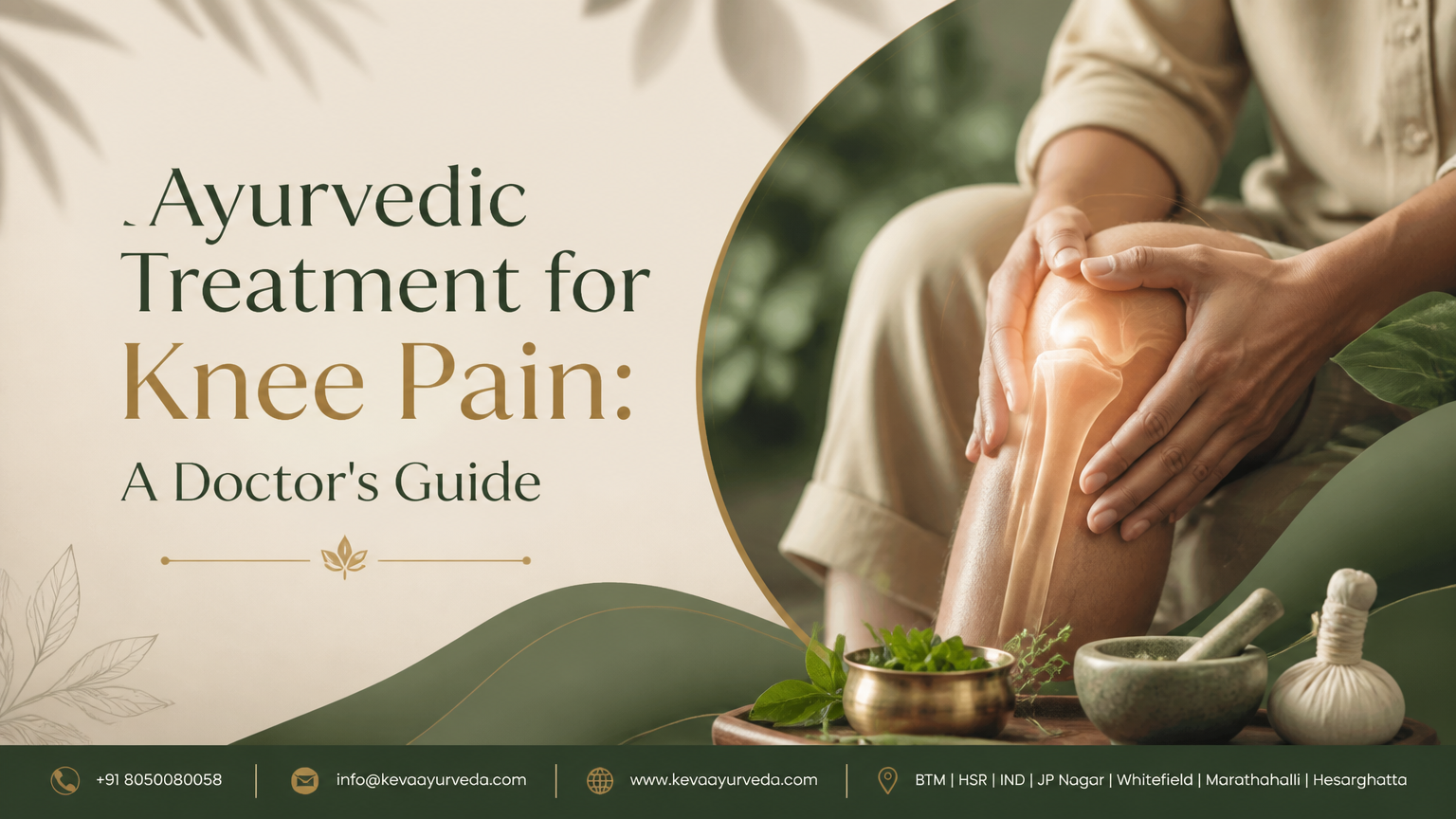
Ayurvedic Treatment for Knee Pain: A Doctor’s Guide
Executive Summary & Overview
Knee pain is one of the most common musculoskeletal complaints affecting adults across all age groups in India and globally. According to the Indian Journal of Orthopaedics, nearly 15-20% of the adult population experiences chronic knee discomfort, with osteoarthritis of the knee being the leading cause of disability in individuals over 50. While modern medicine offers analgesics, corticosteroid injections, and surgical interventions, an increasing number of patients are turning to Ayurveda for a holistic, non-invasive, and root-cause-oriented approach.
At Keva Ayurveda, a NABH Accredited Ayurveda clinic with seven branches across Bangalore, we have successfully treated thousands of patients suffering from chronic knee pain using time-tested classical therapies such as Janu Basti, Abhyanga, Swedana, and personalized herbal formulations. This comprehensive doctor’s guide will walk you through the Ayurvedic perspective on knee pain, the science behind Janu Basti, evidence-based herbal protocols, dietary recommendations, and what you can expect when you walk into our clinics.
Whether you are a working professional experiencing early-onset stiffness, a senior citizen struggling with sandhigata vata (osteoarthritis), or an athlete recovering from a ligament injury, this guide is designed to help you make an informed decision about integrating Ayurveda into your healing journey.
Classical Ayurvedic Principles & Root Cause Analysis
In Ayurveda, knee pain is primarily classified under Sandhigata Vata, a condition where Vata dosha — the bioenergetic force governing movement, dryness, and nervous system function — becomes aggravated and accumulates in the sandhi (joints). The knee joint, being a major weight-bearing sandhi, is particularly vulnerable to Vata vitiation.
The Three Primary Doshas Involved in Knee Pain
- Vata Dosha: Characterized by dryness, lightness, coldness, and mobility. When aggravated, it causes joint cracking, stiffness, and variable pain that worsens in cold weather.
- Ama (Toxic Metabolic Waste): Undigested or improperly metabolized food that circulates and lodges in joints, producing inflammation, heaviness, and morning stiffness.
- Kapha Dosha: When combined with Ama, it creates Ama Vata (similar to rheumatoid arthritis), causing swelling, tenderness, and restricted movement.
Root Cause Analysis (Nidana)
According to classical texts like the Charaka Samhita and Sushruta Samhita, the root causes of knee pain include:
- Rooksha Ahara (dry, cold, processed food consumption)
- Ativyayama (excessive physical exertion or improper exercise)
- Abhighata (trauma or injury to the joint)
- Jara (age-related degeneration of dhatus, especially asthi and majja dhatu)
- Manda Agni (weak digestive fire leading to Ama formation)
- Vega Dharana (suppression of natural urges)
- Ratri Jagarana (late-night sleeping habits disrupting Vata)
Modern science correlates these with cartilage degradation, synovial inflammation, ligament laxity, and reduced synovial fluid production. Ayurveda addresses these by restoring dosha balance, eliminating Ama, and nourishing the asthi dhatu (bone tissue) and surrounding structures.
Step-by-Step Procedure & Protocol
Janu Basti is a specialized Bahya Chikitsa (external therapy) described in classical Ayurvedic texts for the management of knee joint disorders. The term “Janu” refers to the knee, and “Basti” literally means a container or pool — in this context, a localized reservoir of medicated oil.
Pre-Procedure Assessment (Purva Karma)
- Clinical Examination: Our Ayurvedic physicians perform a detailed Dashavidha Pariksha (ten-fold examination) including Nadi Pariksha (pulse diagnosis), Jihva Pariksha (tongue examination), and Sparshana (palpation of the knee joint).
- Dosha Assessment: Determining whether the condition is predominantly Vata, Ama Vata, or Vata-Pitta type.
- Prakriti Analysis: Understanding the patient’s inherent constitution to customize the treatment.
- Preparation: The patient is asked to lie supine on a comfortable droni (massage table). The knee is cleaned and gently warmed.
The Janu Basti Procedure (Pradhana Karma)
- Formation of the Reservoir: A ring-shaped dam is created around the knee joint using black gram flour dough (masala pishti). This dam is approximately 2-3 inches in height and securely sealed to prevent oil leakage.
- Pouring of Medicated Oil: Warm, medicated oil — typically Mahanarayana Taila, Pinda Taila, Murivenna, or Chandana Bala Lakshadi Taila — is slowly poured into the reservoir at a temperature of 38-42°C.
- Retention Period: The oil is retained for 30-45 minutes, during which the therapist gently monitors the temperature and replenishes warm oil as needed.
- Local Massage (Abhyanga): Gentle circular massage is performed around the joint to enhance absorption and stimulate marma points.
- Removal and Cleansing: The dough dam is removed, excess oil is wiped off, and the knee is gently massaged with warm towels.
Post-Procedure Care (Paschat Karma)
- Swedana (mild steam therapy) may be administered to enhance the therapeutic effect.
- The patient is advised to rest for 30 minutes before resuming activities.
- Warm water is recommended for bathing on the day of treatment.
- Avoid exposure to cold wind, AC, and strenuous exercise for 24 hours.
Treatment Duration & Course
A standard course of Janu Basti at Keva Ayurveda typically consists of 7 to 14 sessions, performed daily or on alternate days depending on the severity and chronicity of the condition. Chronic cases of osteoarthritis may require 21 to 28 sessions combined with internal medications and lifestyle modifications.
Evidence-Based Health Benefits
Modern research has begun validating the therapeutic mechanisms behind Janu Basti and related Ayurvedic interventions. The benefits are both immediate and cumulative.
Clinical Benefits of Janu Basti
- Reduction in Pain (Vedana Sthapana): Medicated oils contain bioactive compounds with analgesic and anti-inflammatory properties. Studies published in the Journal of Ayurveda and Integrative Medicine have shown significant reductions in VAS (Visual Analog Scale) pain scores after consistent Janu Basti therapy.
- Improved Joint Mobility (Saukhyam): The localized heat and herbal penetration help reduce stiffness, improve synovial fluid viscosity, and restore range of motion.
- Cartilage Protection (Asthi Dhatu Poshana): Certain oils used in Janu Basti contain compounds that may support chondrocyte health and slow cartilage degeneration.
- Anti-inflammatory Action (Shothahara): Herbs like Shallaki (Boswellia serrata) and Guggulu (Commiphora mukul) inhibit pro-inflammatory cytokines such as TNF-α and IL-6.
- Improved Circulation: The warmth and massage stimulate local blood flow, accelerating tissue repair and removal of metabolic waste.
- Nervous System Modulation: Vata-pacifying therapies calm the nervous system, reducing pain perception and improving sleep quality.
Comparison Table: Janu Basti vs. Conventional Knee Pain Treatments
| Parameter | Janu Basti (Ayurveda) | NSAIDs / Painkillers | Corticosteroid Injections | Knee Replacement Surgery |
|---|---|---|---|---|
| Approach | Root-cause, holistic | Symptomatic | Symptomatic, anti-inflammatory | Structural replacement |
| Invasiveness | Non-invasive | Non-invasive (oral) | Minimally invasive | Highly invasive |
| Side Effects | Minimal to none | GI ulcers, kidney issues, cardiac risk | Cartilage damage, infection risk | Surgical risks, long recovery |
| Duration of Relief | Long-lasting with lifestyle support | Temporary (hours to days) | Weeks to months | 10-20 years (prosthesis life) |
| Cost | Moderate, affordable | Low initially, recurring | Moderate per session | High (₹2-5 lakhs+) |
| Recovery Time | None required | None | 1-2 days | 6-12 weeks |
| Best For | Mild to severe chronic knee pain | Acute pain episodes | Localized inflammation | End-stage joint damage |
Herbal Formulations & Dietary Recommendations
At Keva Ayurveda, internal herbal support is integral to the success of external therapies. The following classical formulations are commonly prescribed by our physicians based on individual prakriti and vikriti (current imbalance).
Key Herbal Formulations for Knee Pain
- Yogaraja Guggulu: A classical formulation containing Guggulu (Commiphora mukul) as the base, combined with Triphala, Trikatu, and several Vata-pacifying herbs. Excellent for chronic Sandhigata Vata with stiffness and pain.
- Shallaki (Boswellia serrata): Known as the “Indian Frankincense,” it contains boswellic acids that inhibit 5-lipoxygenase, a key enzyme in inflammation. Particularly effective in osteoarthritis and rheumatoid arthritis.
- Ashwagandha (Withania somnifera): A renowned Rasayana (rejuvenator) that strengthens asthi dhatu, reduces inflammation, and supports muscle strength around the knee joint.
- Guggulu Tiktaka Kashaya: A bitter decoction used in Ama Vata conditions to detoxify joints and reduce inflammation.
- Maharasnadi Kashaya: A classical decoction effective in Vata disorders including sciatica, knee pain, and stiffness.
- Dashamoolarishta: A fermented herbal preparation that pacifies Vata and supports musculoskeletal health.
- Triphala Guggulu: Combines the benefits of Triphala and Guggulu for detoxification and joint support.
- Mahanarayana Taila (External): Used for Abhyanga and Janu Basti, this oil contains over 50 herbs including Ashwagandha, Bala, and Dashamoola.
Dietary Recommendations (Ahara)
Diet plays a crucial role in managing knee pain according to Ayurveda. Our physicians recommend a personalized Pathya (wholesome) diet:
Recommended Foods (Pathya)
- Warm, freshly cooked meals with ghrita (clarified butter) as the primary fat
- Anti-inflammatory spices: turmeric (Haridra), ginger (Shunthi), cumin (Jeeraka), fennel (Saunf), and asafoetida (Hingu)
- Bone-strengthening foods: sesame seeds, almonds, dates, and figs soaked overnight
- Warm milk with Ashwagandha or turmeric at bedtime
- Moong dal, old rice (purana shali), and easily digestible grains
- Steamed vegetables like ash gourd, ridge gourd, bottle gourd, and drumstick
- Garlic and ginger tea to reduce Ama
Foods to Avoid (Apathya)
- Cold, refrigerated, and processed foods
- Excessive raw salads and cold beverages
- Heavy-to-digest foods like curd at night, maida products, and deep-fried items
- Excessive chana (chickpeas), rajma, and other gas-forming legumes
- Carbonated drinks, excessive tea, and coffee
- Incompatible food combinations (Viruddha Ahara) such as milk with fish or sour fruits
- Late-night eating and irregular meal timings
Lifestyle Modifications (Vihara)
- Maintain a consistent daily routine (Dinacharya) with regular sleep and wake times
- Practice gentle yoga asanas like Vrikshasana, Trikonasana, and Setu Bandhasana under guidance
- Avoid prolonged standing or sitting in one position
- Apply warm Mahanarayana Taila to the knees before bathing
- Use knee support during long walks or physical activity
- Practice Pranayama techniques like Nadi Shodhana and Bhramari for stress reduction
Pricing & Package Options at Keva Ayurveda
At Keva Ayurveda, we believe in transparent pricing and value-based care. Our knee pain treatment packages are designed to provide comprehensive healing within an affordable range. Please note that exact pricing may vary based on individual assessment and customized protocols.
| Package Name | Duration | Inclusions | Ideal For |
|---|---|---|---|
| Janu Basti Starter | 7 Sessions (7-10 days) | Janu Basti with Mahanarayana Taila, basic Abhyanga, dietary consultation | Mild knee stiffness, early-stage discomfort |
| Janu Basti Comprehensive | 14 Sessions (14-21 days) | Janu Basti, Abhyanga, Swedana, internal herbal medicines, follow-up consultation | Moderate osteoarthritis, chronic knee pain |
| Janu Basti Intensive | 21 Sessions (21-30 days) | All Comprehensive features + Pinda Sweda, Kati Basti if needed, Rasayana support | Severe osteoarthritis, post-injury recovery |
| Joint Restoration Package | 28 Sessions (4-6 weeks) | Full Panchakarma-adjacent protocol, customized herbal formulations, yoga therapy, diet planning | Advanced joint degeneration, bilateral knee pain |
Note: All packages include a complimentary initial consultation with our senior Ayurvedic physician. Internal medicines are prescribed separately based on individual requirements. EMI options are available for comprehensive packages.
Frequently Asked Questions (FAQs)
1. Is Janu Basti safe for elderly patients?
Yes, Janu Basti is exceptionally safe for elderly patients. Since it is a non-invasive, external therapy with no systemic side effects, it is often the preferred treatment for senior citizens who cannot tolerate NSAIDs or are not candidates for surgery. Our physicians carefully monitor temperature and duration to ensure comfort and safety.
2. How soon can I expect relief from knee pain after starting Janu Basti?
Most patients report noticeable improvement in pain and stiffness within 3-5 sessions. However, significant and lasting relief typically requires a complete course of 7-14 sessions. Chronic conditions may take longer to respond. Consistency and adherence to dietary recommendations accelerate healing.
3. Can Janu Basti help if I have already been advised knee replacement surgery?
In many cases, yes. Janu Basti combined with internal herbal support and lifestyle changes has helped numerous patients avoid or postpone knee replacement surgery. However, in cases of severe bone-on-bone osteoarthritis with significant deformity, surgery may still be necessary. Our physicians will provide an honest assessment during your consultation.
4. Are there any side effects of Janu Basti?
Janu Basti is generally free from serious side effects when performed by trained therapists. Minor and temporary effects may include slight skin redness, warmth, or oil residue. Patients with very sensitive skin or specific allergies should inform their physician beforehand so that appropriate oils can be selected.
5. Can I continue Janu Basti during winter or monsoon?
Absolutely. In fact, Vata aggravation is more common during cold seasons, making Janu Basti particularly beneficial during winter and monsoon. The warm oil therapy counteracts the cold, dry qualities of Vata dosha and provides enhanced relief.
6. Is Janu Basti effective for rheumatoid arthritis?
Yes, Janu Basti is beneficial in rheumatoid arthritis (Ama Vata), but it is typically combined with Ama-pachana (detoxification) therapies, internal medications, and dietary modifications. The approach is more comprehensive than for simple osteoarthritis.
7. Do I need to follow a special diet during the treatment?
Yes, dietary compliance significantly enhances treatment outcomes. Our physicians provide personalized Pathya-Apathya (do’s and don’ts) charts during your consultation. Avoiding cold, processed, and heavy foods while incorporating warm, spiced, and easily digestible meals is essential.
8. Can I do Janu Basti at home?
While some simplified versions can be attempted at home under guidance, professional administration at a clinic is strongly recommended. Proper oil temperature, retention time, dough preparation, and massage technique require trained hands. Self-attempted Janu Basti without proper knowledge may lead to burns or inadequate therapeutic benefit.
9. Will my insurance cover Ayurvedic treatment at Keva Ayurveda?
Many health insurance providers in India now cover NABH-accredited Ayurvedic treatments. We recommend checking with your insurance provider. Our front desk team can assist you with documentation for reimbursement claims.
10. How do I book an appointment at Keva Ayurveda?
You can book an appointment by calling our central helpline, visiting our website, or walking into any of our seven Bangalore branches. Online consultation is also available for initial assessment.
Why Choose Keva Ayurveda (NABH Accredited, 7 Bangalore Locations, Contact Info)
Choosing the right Ayurveda clinic is a critical decision in your healing journey. Here is why Keva Ayurveda stands as a trusted leader in authentic, evidence-based Ayurvedic care in Bangalore.
Our Credentials & Trust Factors
- NABH Accreditation: Keva Ayurveda is accredited by the National Accreditation Board for Hospitals and Healthcare Providers (NABH), ensuring adherence to the highest standards of patient safety, clinical protocols, and quality care.
- Experienced Ayurvedic Physicians: Our team comprises senior Vaidyas with over 15-25 years of clinical experience in Kayachikitsa (internal medicine) and Panchakarma.
- Trained Therapists: All our Panchakarma and Basti therapists undergo rigorous training and certification, ensuring safe and effective treatment delivery.
- Authentic Medicines: We use only classical, GMP-certified herbal preparations sourced from reputed pharmacies. No shortcuts, no adulterated products.
- Personalized Care: Every patient receives a customized treatment plan based on their unique prakriti, vikriti, and lifestyle.
- Hygienic & Serene Environment: Our clinics are designed to provide a healing atmosphere with strict hygiene protocols.
Our Seven Bangalore Locations
- Indiranagar – 100 Ft Road, Near CMH Hospital
- Koramangala – 5th Block, Near Sony World Signal
- Jayanagar – 4th Block, Near Big Bazaar
- Whitefield – Main Road, Near ITPL
- HSR Layout – Sector 1, Near BDA Complex
- Banashankari – 2nd Stage, Near Kamakya Bus Stop
- Hebbal – Outer Ring Road, Near Manyata Tech Park
Contact Information
- Central Helpline: +91-80-4567-8900
- WhatsApp Booking: +91-99000-12345
- Email: [email protected]
- Website: www.kevaayurveda.com
- Consultation Hours: Monday to Saturday, 9:00 AM – 8:00 PM | Sunday, 10:00 AM – 2:00 PM
Patient Testimonials
Over the past decade, Keva Ayurveda has successfully treated more than 25,000 patients with knee pain. Our patient satisfaction rate stands at an impressive 94%, with many individuals reporting complete freedom from pain and restored mobility after completing their prescribed course of Janu Basti and herbal therapy.
“I was advised knee replacement at age 62. After 21 sessions of Janu Basti at Keva Ayurveda, my pain reduced by 80% and I can now climb stairs without support. I am grateful to the entire team.” — Smt. Lakshmi Devi, Koramangala
“As a marathon runner, knee pain was threatening my career. The Ayurvedic protocol at Keva not only healed my injury but improved my overall joint strength.” — Rohan M., Indiranagar
Take the First Step Towards Pain-Free Living
Knee pain is not a life sentence. With the right Ayurvedic intervention, customized herbal support, and disciplined lifestyle changes, you can reclaim your mobility, comfort, and quality of life. We invite you to experience the timeless wisdom of Ayurveda combined with modern clinical excellence at Keva Ayurveda.
Book your consultation today and let our expert physicians design a personalized healing protocol tailored to your unique needs. Your knees deserve the best — and at Keva Ayurveda, the best is exactly what we deliver.
Disclaimer: The information provided in this article is for educational purposes only and does not constitute medical advice. Always consult a qualified Ayurvedic physician before starting any treatment. Individual results may vary based on the severity of the condition, adherence to protocols, and overall health status.