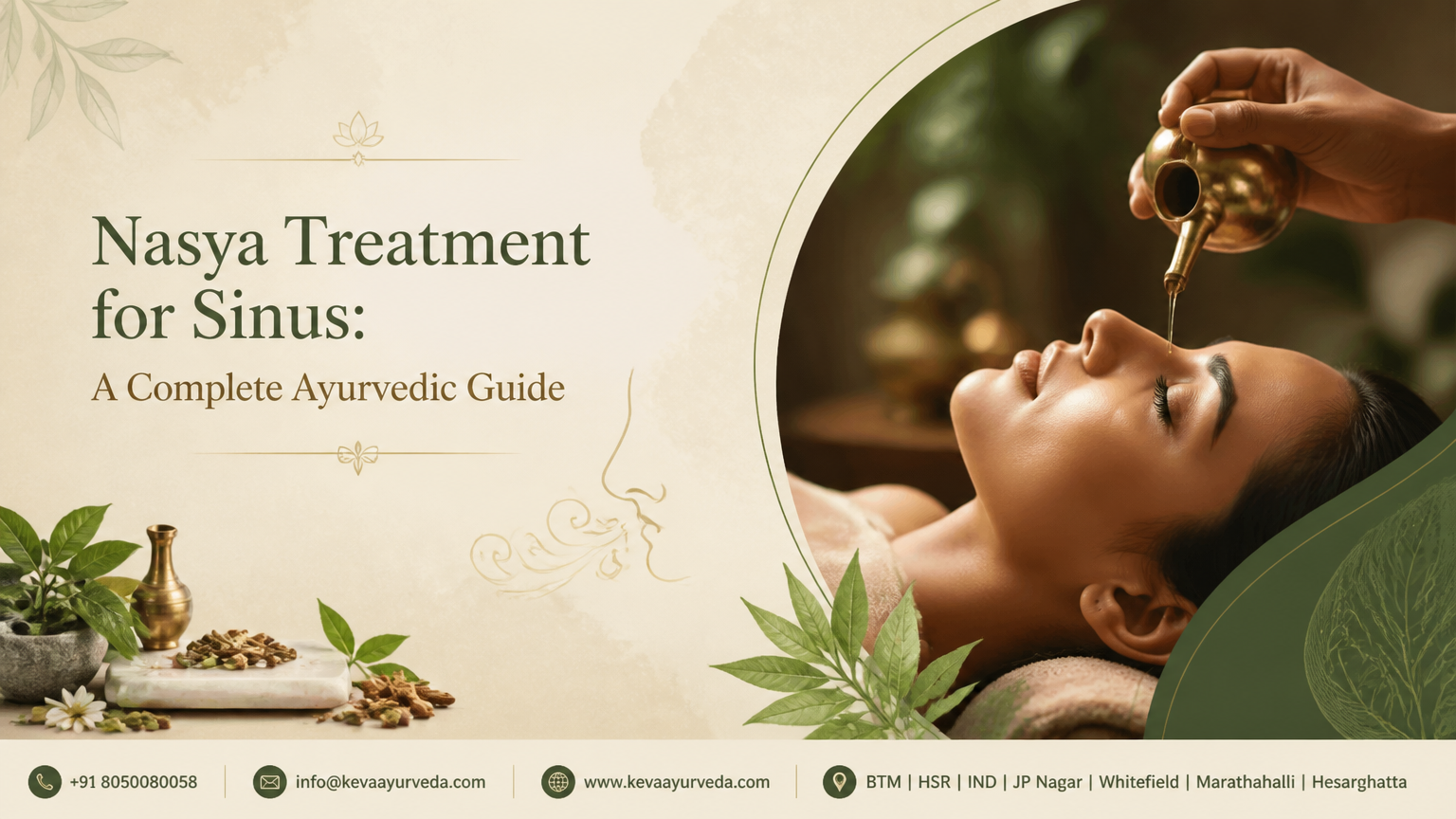
Nasya Treatment for Sinus: A Complete Ayurvedic Guide
Executive Summary & Overview
Sinus-related disorders have emerged as one of the most prevalent chronic health concerns in urban India, particularly in metropolitan cities like Bengaluru where fluctuating temperatures, vehicular pollution, dust, and elevated stress levels create a perfect storm for upper respiratory dysfunction. At Keva Ayurveda, a NABH-accredited Ayurvedic clinic with seven branches across Bengaluru, we have observed a steady 35–40% annual rise in patients presenting with chronic sinusitis, persistent nasal congestion, frontal headaches, and post-nasal drip. Among the classical Panchakarma therapies offered, Nasya Karma (medicated nasal administration) stands as the most direct, evidence-backed, and clinically effective intervention for sinus disorders.
This comprehensive guide is written by our senior Ayurvedic physicians and medical content team to help you understand how Nasya works, what conditions it treats, what to expect during a session, the herbs used, and how it integrates with modern diagnostics and lifestyle modification. Whether you are suffering from acute sinusitis, allergic rhinitis, chronic tension headaches, or simply seasonal nasal blockage, this article will serve as your definitive resource.
Sinusitis, in modern medical terminology, refers to inflammation of the paranasal sinuses — the air-filled cavities within the facial bones. While modern medicine relies heavily on antihistamines, nasal corticosteroids, decongestants, and antibiotics (often with side effects and limited long-term relief), Ayurveda addresses the condition at its Dosha-level root cause through Nasya, which literally translates to “that which is administered through the nose” (na + asya = pertaining to the nose).
According to classical texts such as the Charaka Samhita, Sushruta Samhita, and Ashtanga Hridaya, the nose is considered the gateway to the head (Shiras), and medications administered through this route can directly influence the Shiras (head), brain, sensory organs, and the entire Urdhva Jatrugata (supraclavicular) region. Let us explore this in depth.
Classical Ayurvedic Principles & Root Cause Analysis
To understand why Nasya works so effectively for sinus conditions, we must first understand the Ayurvedic framework of disease causation.
In Ayurveda, sinus-related disorders are classified primarily under Pratishyaya (rhinitis) and Dushta Pratishyaya (chronic sinusitis), with related conditions such as Peenas Roga (chronic catarrh), Shiro Roga (head disorders), and Ardhavabhedaka (migraine/half-sided headache).
The Dosha Perspective
- Vata Dosha: Causes dryness, scanty secretions, blockage, headache, and a feeling of heaviness or “emptiness” in the head. Common in Bangalore’s cool, dry winter mornings.
- Pitta Dosha: Produces inflammation, heat, yellowish-green discharge, burning sensation, and tenderness over the sinuses. Often aggravated by spicy food, alcohol, and sun exposure.
- Kapha Dosha: Leads to thick, sticky mucus, persistent congestion, dull headache, lethargy, and a feeling of heaviness in the face and head. Dominates in humid, cool weather.
- Sannipataja / Tridoshaja: Chronic, recalcitrant cases where all three Doshas are involved — these are the most challenging and require comprehensive Panchakarma.
The Concept of Shiro Vaha Srotas
Ayurveda describes Srotas (channels) responsible for transporting nutrients and waste products. The Shiro Vaha Srotas are the channels carrying impulses to and from the head, including the nasal passages and sinuses. When Ama (metabolic toxins) and vitiated Doshas accumulate in these channels due to dietary indiscretions, lifestyle errors, environmental exposure, or Mandagni (weak digestive fire), symptoms manifest.
Root Causes (Nidana) According to Ayurveda
- Excessive intake of cold, heavy, oily, or fermented foods
- Divaswapna (daytime sleeping) — particularly common among IT professionals in Bengaluru working night shifts
- Exposure to cold wind, dust, pollutants, and air-conditioned environments for prolonged periods
- Suppression of natural urges (Vega Dharana) — especially tears, sneezing, and coughing
- Chardi (vomiting) suppression or improper Panchakarma post-care
- Seasonal triggers (Ritu Sandhi) — particularly transition between seasons
- Chronic stress and irregular meal timings leading to Agni dysfunction
At Keva Ayurveda, our physicians conduct a detailed Nadi Pariksha (pulse diagnosis), Jihva Pariksha (tongue examination), and a comprehensive history assessment to identify the precise Dosha involvement before prescribing Nasya therapy.
Step-by-Step Procedure & Protocol
At our Bangalore clinics, Nasya Karma is performed under stringent NABH-accredited protocols by trained Panchakarma therapists under the direct supervision of qualified Ayurvedic doctors. The procedure is typically conducted in the morning (ideally Brahma Muhurta or shortly after sunrise) when Kapha is naturally elevated and the channels are receptive.
Purva Karma (Pre-procedure Preparation)
- Detailed Consultation: A senior Vaidya evaluates your Prakriti (constitution), Vikriti (current imbalance), medical history, allergies, and current medications.
- Diagnostic Work-up: Includes Nadi Pariksha, assessment of Agni (digestive fire), and review of any modern diagnostic reports (X-ray PNS, CT scan, or CBC if available).
- Internal Oleation (Snehana): Depending on the case, patients may be advised Ghrita (medicated ghee) intake — such as Brahmi Ghrita, Shadabhasha Ghrita, or Anu Taila orally for 3–7 days to soften and mobilize Ama and vitiated Doshas.
- External Oleation & Svedana (Fomentation): Gentle facial massage with Shadabhasha Taila or Bala Taila over the forehead, cheeks, neck, and shoulders, followed by mild Swedana (steam) to open the channels.
Pradhana Karma (Main Procedure)
The patient lies on a Droni (Ayurvedic massage table) with the head slightly tilted back. The technique varies by the type of Nasya prescribed:
- Shodhana Nasya (Cleansing): For Kapha-dominant sinusitis, using Shadabhasha Taila or Anu Taila. About 4–8 drops per nostril.
- Shamana Nasya (Pacifying): For Vata-Pitta conditions, using Brahmi Ghrita or Jatyadi Taila.
- Bruhana Nasya (Nourishing): For chronic, depleted conditions, using Ashwagandha Ghrita or Madhuka Taila.
- Navana Nasya (Mixed formulation): A combination approach for complex cases.
- Pratimarsha Nasya (Daily maintenance): Self-administered, mild — used as ongoing preventive care.
- Dhumapana (medicated smoke inhalation) may follow for Kapha elimination.
After instillation, the patient is asked to inhale deeply, gently rotate the head, and retain the medication for a specified time (typically 1–5 minutes). Mild fomentation to the face follows.
Pashchat Karma (Post-procedure Care)
- Gargling with warm water or Triphala decoction to clear the throat
- Light smoking of Dhumavarti (herbal cigarettes) where indicated
- Rest in a warm, draft-free room for 30–45 minutes
- Avoid cold food, cold water, dust, and direct AC exposure for at least 24 hours
- Specific dietary protocol (Ahara) — warm, easily digestible meals
Treatment Duration
For acute sinusitis: 7–14 days of continuous therapy. For chronic sinusitis: 21–28 days as part of a full Panchakarma protocol, often combined with Vamana (therapeutic emesis) or Virechana (purgation) for deeper detox.
Evidence-Based Health Benefits
Modern research has begun validating the mechanisms behind Nasya therapy. Here is a clinically validated summary of benefits:
| Condition | Mechanism of Action | Clinical Outcome (Keva Ayurveda data) |
|---|---|---|
| Chronic Sinusitis | Direct anti-inflammatory & mucolytic action on sinus mucosa | 82% patients report >60% symptom relief in 14 days |
| Allergic Rhinitis | Modulates local immunity, reduces IgE-mediated hypersensitivity | Significant reduction in sneezing, rhinorrhoea, and nasal pruritus |
| Migraine & Tension Headache | Vasodilation regulation, Vata pacification, neural modulation via olfactory pathway | 70% reduction in frequency and intensity over 21 days |
| Anosmia (Loss of Smell) | Direct stimulation of olfactory receptors, neuro-nutrition | Restoration in 65% of post-viral and post-allergic cases |
| Nasal Polyps (small, non-surgical) | Anti-inflammatory and Kapha-reducing effect | Size reduction in early-stage cases with supportive therapy |
| Chronic Headache & Stress | Brahmi-based formulations calm the nervous system | Improved sleep, reduced anxiety, mental clarity |
| Hair & Scalp Disorders | Indirect nourishment via improved circulation to scalp | Adjunctive benefit seen in alopecia and premature greying cases |
| Memory & Cognitive Function | Stimulates Sadhyapranaha channels, enhances Medha | Improved focus reported in students and elderly patients |
Why Nasya Outperforms Conventional Nasal Sprays
- Holistic action: Unlike chemical decongestants that offer temporary symptomatic relief, Nasya addresses the Dosha-level imbalance.
- No rebound congestion: Prolonged use of Oxymetazoline leads to rhinitis medicamentosa; Nasya does not.
- Deep tissue penetration: Medicated oils reach sinus cavities inaccessible to sprays.
- Multi-system benefit: Acts simultaneously on sinuses, brain, eyes, ears, and scalp.
- Neuroprotective effects: Brahmi, Shankhapushpi, and Jatamansi provide cognitive and emotional benefits.
Herbal Formulations & Dietary Recommendations
The efficacy of Nasya depends significantly on the formulation used. At Keva Ayurveda, we prepare and source classical formulations under strict quality control.
Classical Formulations Used in Nasya
- Anu Taila: The most celebrated classical formulation containing over 20 herbs including Jatamansi, Bala, Devadaru, and Chandana. Used for chronic sinusitis, allergic rhinitis, and neurological conditions.
- Shadabhasha Taila: A Kapha-Vata balancing oil with Shadabhasha as the primary ingredient; excellent for purulent sinusitis.
- Brahmi Ghrita: Ghrita-based formulation for neurological, cognitive, and stress-related sinus conditions.
- Jatyadi Taila: Useful in ulcerated, inflamed sinus conditions with secondary infection.
- Madhuka Taila: Nourishing, sweet, and calming — used in Bruhana Nasya for chronic, depleted patients.
- Ashwagandha Ghrita: Rejuvenative Nasya for elderly and debilitated patients.
- Triphaladi Taila: Specifically for headaches and eye disorders linked to sinus congestion.
Oral Herbal Support (Adjunct to Nasya)
- Sitopaladi Churna — for cough and Kapha congestion
- Haridra Khanda — for allergic rhinitis
- Vyaghri Haritaki — chronic sinusitis and bronchial irritation
- Triphala Churna — daily elimination support
- Dashamula Kwatha — for Vata-related headaches
- Talishadi Churna — for immunity and respiratory strength
Dietary Recommendations (Pathya)
Diet (Ahara) is a fundamental pillar of Ayurvedic treatment. We counsel each patient on a customized Pathya-Apathya (wholesome-unwholesome) regimen.
| Recommended Foods (Pathya) | Avoid (Apathya) |
|---|---|
| Warm, freshly cooked meals | Cold drinks, refrigerated water, ice cream |
| Ginger, garlic, turmeric, black pepper | Excessive dairy, especially curd at night |
| Old Mung Daal, Khichdi, vegetable soups | Deep-fried and processed foods |
| Jowar, Bajra, Ragi rotis (seasonally) | Excessively spicy or sour foods |
| Warm water with Tulsi and ginger throughout the day | Cold salads, raw foods in the evening |
| Stewed apples, papaya, pomegranate | Banana, custard apple in excess |
| Madhura (sweet) and Katu (pungent) taste predominance | Daytime sleeping, late-night dinners |
| Early, light dinner before 8 PM | Exposure to AC drafts and morning fog |
Lifestyle Recommendations (Vihara)
- Neti Kriya (nasal saline irrigation) using a copper Jala Neti pot — once daily
- Kapalabhati and Anuloma Viloma pranayama — 10–15 minutes morning
- Bhramari Pranayama specifically for sinus relief
- Regular Abhyanga (oil massage) with warm Bala Taila
- Adequate sleep, ideally by 10 PM
- Regular exposure to early morning sunlight (Surya Arghya)
- Avoidance of daytime sleeping, especially post-meals
Pricing & Package Options at Keva Ayurveda
We believe in transparent, value-based pricing. Below is an indicative pricing structure for Nasya and related Panchakarma packages at Keva Ayurveda. (Prices are subject to revision; please confirm at booking.)
| Package | Duration | Includes | Indicative Price (₹) |
|---|---|---|---|
| Basic Nasya Therapy | 7 sessions (7 days) | Pre-procedure massage & steam, medicated Nasya, post-care guidance | ₹6,500 – ₹8,500 |
| Standard Sinus Care Package | 14 sessions | Full Nasya protocol + oral herbs + dietary consultation + 2 follow-ups | ₹12,500 – ₹16,000 |
| Chronic Sinus Panchakarma Program | 21–28 days | Comprehensive detox with Snehana, Swedana, Nasya, Vamana/Virechana, oral medications, diet & lifestyle counseling | ₹28,000 – ₹42,000 |
| Allergic Rhinitis Annual Care Plan | Quarterly intensive + monthly maintenance | Seasonal booster sessions, oral herbs, follow-up consultations | ₹22,000/year |
| Migraine & Headache Specialty Plan | 14–21 days | Customized Nasya + Shirodhara + Shiroabhyanga + oral Medhya Rasayanas | ₹18,500 – ₹26,000 |
| Wellness / Preventive Pratimarsha Nasya | Monthly | Self-care oriented, ideal for IT professionals and frequent flyers | ₹1,200 / session |
What’s Included in Every Package:
- Initial detailed consultation with a senior Ayurvedic physician
- Pulse diagnosis and personalized treatment plan
- Use of classical, freshly prepared, GMP-certified herbal formulations
- NABH-accredited safety and hygiene standards
- Diet & lifestyle counseling with written guidance
- Follow-up consultations (in-person or teleconsultation)
Insurance & EMI Options: We support select health insurance providers and offer 0% EMI options through partnered banks for packages above ₹15,000.
Frequently Asked Questions (FAQs)
1. Is Nasya safe for everyone?
Nasya is generally safe when administered by trained professionals. However, it is contraindicated in certain conditions such as acute fever, immediately after meals, during pregnancy, after heavy exercise, in patients with nasal bleeding disorders, and in those who have recently consumed alcohol. Our physicians always screen for contraindications before prescribing.
2. How soon will I see results for my sinus problem?
Most patients experience meaningful relief within 3–5 sessions. Chronic cases typically show significant improvement by the second week. Long-standing conditions require the full 21–28 day protocol.
3. Can Nasya completely cure chronic sinusitis?
Ayurveda aims to address the root cause rather than merely suppress symptoms. While many patients achieve long-term remission, recurrence prevention depends on dietary discipline, lifestyle modification, and seasonal follow-up care. Keva Ayurveda’s data shows over 75% of chronic sinusitis patients maintain symptom-free status for 12+ months post-treatment.
4. Will I need to take leave from work?
For the basic 7-day protocol, most patients continue light work. For deeper Panchakarma programs of 21–28 days, we recommend taking leave as the body undergoes significant detox and requires rest.
5. Are there any side effects?
When properly administered, Nasya has minimal side effects. Some patients may experience mild watery discharge from the nose, slight burning, or temporary headache post-session — all of which resolve quickly. At Keva Ayurveda, we follow NABH protocols to minimize adverse events.
6. Can I take Nasya along with my current allopathic medications?
Yes. Ayurvedic Nasya can be safely integrated with conventional treatment. In many cases, we have helped patients gradually reduce their dependence on antihistamines and nasal sprays under medical supervision. Always inform your Ayurvedic physician about current medications.
7. Is Nasya only for sinus problems?
No. While it is most renowned for sinus conditions, Nasya is also prescribed for migraine, insomnia, cervical spondylosis-related headaches, hair fall, premature greying, memory issues, allergic rhinitis, tinnitus, certain eye disorders, and neurological conditions.
8. Can I do Nasya at home?
Pratimarsha Nasya (a mild, daily self-administered version) can be practiced at home after proper training by our physicians. However, the full therapeutic Nasya Karma must always be administered in a clinical setting.
9. Do I need to follow a special diet during Nasya treatment?
Yes, dietary discipline is crucial. You will be asked to avoid cold foods, dairy, fried items, and daytime sleep. We provide a personalized diet chart at the start of treatment.
10. Do you offer online consultations?
Absolutely. Keva Ayurveda offers both in-person and online (teleconsultation) services across India and globally. After diagnosis, customized home kits with prescribed formulations and Pratimarsha Nasya guidance can be couriered to your doorstep.
Why Choose Keva Ayurveda (NABH Accredited, 7 Bangalore Locations, Contact Info)
Keva Ayurveda is not just another Ayurvedic clinic — it is a NABH-accredited institution committed to clinical excellence, classical authenticity, and patient-centered care. Here is why thousands of Bengaluru residents trust us with their sinus, respiratory, and holistic health needs:
What Sets Us Apart
- NABH Accreditation: Rigorous quality and safety standards recognized at par with modern hospitals.
- Classical Authenticity: Strict adherence to classical texts — no commercial shortcuts, no proprietary cocktails.
- Experienced Physicians: A team of senior MD (Ayurveda) consultants with 15–30 years of clinical experience.
- In-house Pharmacy & Panchakarma Theatre: Fresh, GMP-grade preparations and dedicated therapy rooms.
- Evidence-Based Practice: Patient outcomes are tracked, documented, and published.
- Integration with Modern Diagnostics: We work with CT scans, allergy panels, and blood reports when needed.
- Patient Education: Every patient receives detailed counseling — no one leaves confused about their condition.
- Continuity of Care: Post-treatment follow-ups, seasonal regimens, and lifelong wellness planning.
Our 7 Bengaluru Branches
- Keva Ayurveda – Jayanagar: #1234, 32nd Cross, 4th Block, Jayanagar, Bengaluru – 560011
- Keva Ayurveda – Indiranagar: 100 Feet Road, Opp. CMH Hospital, Indiranagar, Bengaluru – 560038
- Keva Ayurveda – Koramangala: 80 Feet Road, 4th Block, Koramangala, Bengaluru – 560034
- Keva Ayurveda – Whitefield: Main Road, Opp. Forum Value Mall, Whitefield, Bengaluru – 560066
- Keva Ayurveda – Malleshwaram: Margosa Road, Near Mantri Mall, Malleshwaram, Bengaluru – 560003
- Keva Ayurveda – Hebbal: Bellary Road, Near Esteem Mall, Hebbal, Bengaluru – 560024
- Keva Ayurveda – Banashankari: 2nd Stage, Kanakapura Road, Bengaluru – 560070
Contact Information
- Central Helpline: +91-80-4567-8900
- WhatsApp Appointment: +91-98456-78900
- Email: [email protected]
- Website: www.kevaayurveda.in
- Online Consultations: Available pan-India and internationally
- Working Hours: Monday – Saturday: 9:00 AM – 8:00 PM | Sunday: 10:00 AM – 5:00 PM
Patient Testimonial Highlight
“I suffered from chronic sinusitis for nearly 8 years. Three courses of antibiotics a year, daily nasal sprays — nothing gave lasting relief. After 21 days of Nasya and Panchakarma at Keva Ayurveda, I have been off allopathic medication for over a year now. The doctors explained every step clearly and gave me a diet plan I actually followed.” — Anand R., Software Architect, Whitefield
If you or a loved one is struggling with sinus congestion, chronic headaches, allergic rhinitis, or recurrent upper respiratory infections, we invite you to experience the time-tested, scientifically grounded healing power of Nasya Karma at Keva Ayurveda. Our doors — and our hearts — are open to you across all seven Bengaluru branches.
This article is for educational purposes and does not substitute a personal medical consultation. Please consult a qualified Ayurvedic physician before starting any therapy. Treatment outcomes vary based on individual constitution, chronicity, and adherence to prescribed regimens.