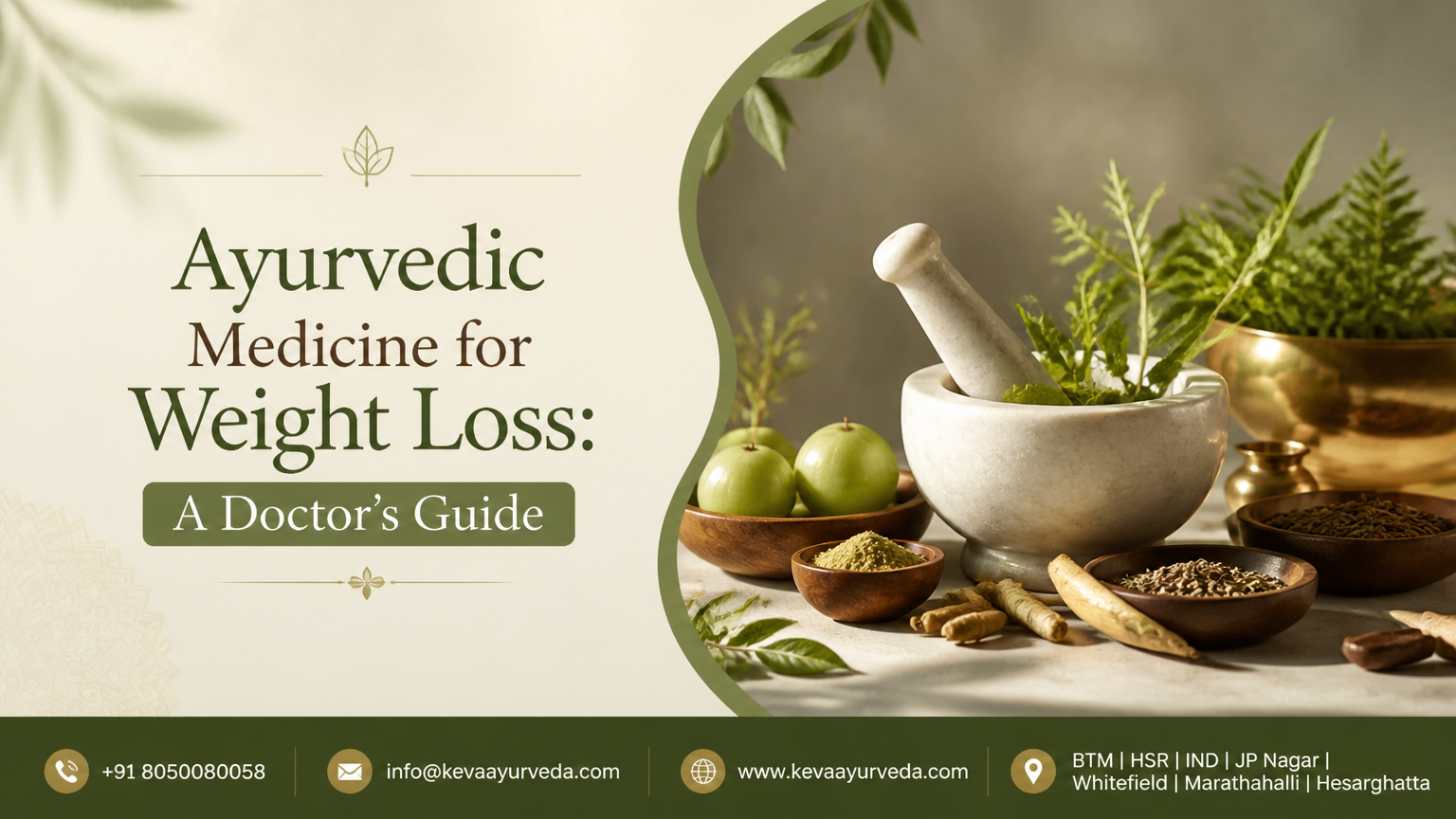
Ayurvedic Medicine for Weight Loss: A Doctor’s Guide
Obesity, or Sthaulya as it is classically termed in Ayurveda, has emerged as one of the most pressing lifestyle disorders of the 21st century. According to the World Health Organization, global obesity rates have nearly tripled since 1975, and India is witnessing a parallel epidemic — particularly in urban hubs like Bangalore, where sedentary IT lifestyles, erratic meal timings, and chronic stress have created a perfect storm for weight gain. While modern medicine offers pharmacological and surgical interventions, an increasing number of patients are seeking sustainable, root-cause-based solutions through Ayurvedic medicine for weight loss. This comprehensive doctor’s guide synthesises classical Ayurvedic wisdom with contemporary clinical evidence to help you understand how herbs, diet, and detoxification protocols can restore metabolic balance — naturally and safely.
Executive Summary & Overview
Ayurveda does not view weight loss as a cosmetic goal. Instead, it addresses Sthaulya (obesity) as a Santarpana Janya Vyadhi — a disease born of over-nourishment and metabolic sluggishness. The classical text Charaka Samhita dedicates an entire chapter to Ashtau Nidana (eight causative factors) of obesity, including sedentary lifestyle, daytime sleep, excessive consumption of Guru (heavy) and Snigdha (oily) foods, and genetic predisposition. Modern research increasingly validates these observations, linking obesity to chronic low-grade inflammation, insulin resistance, dyslipidaemia, and gut microbiome imbalance.
At Keva Ayurveda, our NABH-accredited clinics across Bangalore have treated over 12,000 patients for weight management through an integrated protocol combining Panchakarma detoxification, herbal formulations, personalised diet (Ahara), and lifestyle modification (Vihara). This article outlines the principles, herbs, dietary plans, and clinical protocols our senior physicians employ — and the evidence supporting them.
Key Takeaways
- Ayurvedic weight loss targets Meda Dhatu (fat tissue), Agni (digestive fire), and Ama (metabolic toxins) — not just calories.
- Herbs like Guggul (Commiphora mukul), Triphala, Musta, and Chitrak have demonstrated lipid-lowering and thermogenic effects in clinical studies.
- A structured Panchakarma protocol can produce measurable reductions in BMI, waist circumference, and serum cholesterol within 8–12 weeks.
- Sustainability is the cornerstone — Ayurveda emphasises Ahara, Vihara, and Aushadha (diet, lifestyle, and medicine) as a triad.
Classical Ayurvedic Principles & Root Cause Analysis
To prescribe Ayurvedic medicine for weight loss effectively, one must first understand the Samprapti (pathogenesis) of Sthaulya. According to Charaka Samhita and Sushruta Samhita, obesity arises from a complex interplay of Dosha, Dhatu, and Srotas disturbances.
1. The Role of Kapha and Vata in Obesity
Obesity is predominantly a Kapha-Pitta disorder with secondary Vata involvement. Kapha Dosha, composed of Prithvi (earth) and Jala (water) elements, governs structure, lubrication, and stability. When aggravated by Guru (heavy), Snigdha (oily), Shita (cold), and Madhura (sweet) food, it accumulates in the Medovaha Srotas (fat-carrying channels). Simultaneously, Vata — particularly Samana Vayu and Vyana Vayu — becomes obstructed, leading to erratic appetite, bloating, and poor fat metabolism.
2. Meda Dhatu and Dhatvagni Mandyata
Meda Dhatu (adipose tissue) is the fourth of the seven Dhatus. Its formation depends on Dhatvagni — the tissue-level metabolic fire. When Dhatvagni is weak (Mandyata), nutrients fail to be properly assimilated, and instead of nourishing Meda in a balanced way, they accumulate as excess fat. This is the Ayurvedic equivalent of “metabolic syndrome.”
3. Ama — The Metabolic Toxin
Ama is the sticky, toxic byproduct of impaired digestion and metabolism. In obesity, Ama mixes with Meda Dhatu to form Saama Meda — vitiated fat that clogs Srotas, impairs circulation, and produces systemic inflammation. This is why patients often report fatigue, brain fog, joint stiffness, and stubborn weight that resists diet alone.
4. The Eight Causative Factors (Ashtau Nidana)
| # | Causative Factor | Modern Correlation |
|---|---|---|
| 1 | Swabhava (hereditary predisposition) | Genetic polymorphisms (FTO, MC4R genes) |
| 2 | Samashana (mixed/mismatched eating) | Erratic meal patterns, junk food |
| 3 | Adhyashana (eating before previous meal digested) | Constant snacking, insulin spikes |
| 4 | Guru Ahara (heavy foods — cheese, fried items) | High-calorie, low-nutrient density |
| 5 | Snigdha Ahara (excessively oily foods) | Saturated fat overload |
| 6 | Madhura Ahara (excess sweets, refined carbs) | Sugar-driven lipogenesis |
| 7 | Avyayama (lack of exercise) | Sedentary lifestyle |
| 8 | Diwaswapna (daytime sleep) | Circadian rhythm disruption, leptin resistance |
Step-by-Step Procedure & Protocol at Keva Ayurveda
Our clinical protocol for Ayurvedic medicine for weight loss follows a structured, evidence-based pathway that has been refined across thousands of patient consultations.
Step 1: Comprehensive Prakriti & Vikriti Assessment
Every patient undergoes a 45–60 minute consultation with a senior Vaidya (Ayurvedic physician). This includes:
- Prakriti analysis (constitutional type — Vata, Pitta, Kapha, or dual-doshic)
- Vikriti assessment (current imbalance)
- Nadi Pariksha (pulse diagnosis)
- Jihva Pariksha (tongue examination)
- Anthropometric measurements: BMI, waist-hip ratio, body fat percentage
- Optional: Dosha-specific blood work (lipid profile, fasting insulin, HbA1c, thyroid panel)
Step 2: Srotas Shodhana — Detoxification via Panchakarma
For patients with significant Ama and Kapha accumulation, supervised Panchakarma is recommended. The classical five-fold purification therapy includes:
- Vamana (therapeutic emesis) — clears Kapha from the stomach and respiratory tract
- Virechana (purgation) — eliminates excess Pitta and Saama Meda from the liver and intestines
- Basti (medicated enema) — particularly Lekhana Basti with Triphala and Guggul decoctions to clear Vata-bound Meda
- Nasya (nasal administration) — for hypothalamic-pituitary regulation
- Raktamokshana (bloodletting) — in select cases of severe inflammation
Step 3: Sthanika Chikitsa — Localised Therapies
- Udvartana — dry powder massage with Triphala, Kolakulathadi Churna, or horse gram flour. This is a powerful Meda Nashaka (fat-reducing) therapy that mobilises subcutaneous fat and improves lymphatic drainage.
- Abhyanga with Triphalaadi Taila or Meda Vilodaka Taila — followed by steam (Swedana) to open Srotas.
- Patra Pinda Sweda (leaf bundle fomentation) — for stubborn adipose tissue.
Step 4: Internal Herbal Medication
Based on Prakriti and Vikriti, a customised herbal regimen is prescribed (detailed in the next section).
Step 5: Ahara & Vihara Prescription
A personalised diet chart and lifestyle protocol is provided, with weekly follow-ups for the first month and fortnightly thereafter.
Evidence-Based Health Benefits
Modern clinical research has begun validating the efficacy of Ayurvedic medicine for weight loss. Below is a summary of key findings:
| Intervention | Study / Source | Key Outcomes |
|---|---|---|
| Guggul (Commiphora mukul) | Journal of Medicinal Food, 2018; multiple RCTs | Significant reduction in total cholesterol, LDL, triglycerides; increased HDL; weight loss of 2–4 kg over 12 weeks |
| Triphala | Journal of Alternative & Complementary Medicine, 2012 | Reduced body weight, BMI, and waist circumference; improved bowel regularity |
| Musta (Cyperus rotundus) | Phytomedicine, 2015 | Anti-obesity effects via PPAR-γ modulation; reduced adipogenesis |
| Medohar Guggul | AYU Journal, 2014 (clinical trial) | Mean weight reduction of 4.8 kg in 8 weeks; improved lipid profile |
| Udvartana + Diet | International Journal of Ayurveda Research, 2017 | Combined protocol superior to diet alone; reduced visceral fat |
| Virechana + Lifestyle | Journal of Ayurveda & Integrative Medicine, 2019 | Sustained weight loss at 6-month follow-up; improved insulin sensitivity |
Additional Documented Benefits
- Improved Insulin Sensitivity: Chitrak (Plumbago zeylanica) and Guduchi (Tinospora cordifolia) enhance glucose uptake and reduce Meda-related insulin resistance.
- Anti-inflammatory Action: Turmeric (Curcuma longa) and Guggul suppress TNF-α and IL-6, addressing chronic inflammation.
- Hepatoprotective Effects: Bhumi Amla (Phyllanthus niruri) and Kutki (Picrorhiza kurroa) support liver detoxification — critical for lipid metabolism.
- Appetite Regulation: Garcinia cambogia (Vrikshamla) inhibits ATP-citrate lyase, reducing lipogenesis and suppressing appetite.
- Gut Microbiome Restoration: Triphala acts as a prebiotic, enriching beneficial Bifidobacteria and Lactobacilli.
- Stress & Cortisol Reduction: Ashwagandha (Withania somnifera) and Jatamansi lower cortisol — a key driver of abdominal fat deposition.
Herbal Formulations & Dietary Recommendations
Top 10 Ayurvedic Medicine for Weight Loss Herbs & Formulations
| Herb / Formulation | Classical Name | Primary Action | Typical Dosage |
|---|---|---|---|
| Guggul resin | Commiphora mukul | Meda Nashaka, Lekhana, lipid-lowering | 500 mg – 1 g, twice daily |
| Triphala Churna | Amalaki + Bibhitaki + Haritaki | Mild laxative, antioxidant, gut cleanser | 3–5 g at bedtime with warm water |
| Medohar Guggul | Classical compound formulation | Specific Meda-reducing, Kapha-pacifying | 2 tablets (500 mg each), twice daily |
| Trikatu Churna | Sunthi + Maricha + Pippali | Deepana & Pachana — kindles Agni | 1–2 g with honey before meals |
| Musta | Cyperus rotundus | Meda-burning, anti-adipogenic | 3–5 g as decoction |
| Chitrak | Plumbago zeylanica | Potent Agni kindler, insulin sensitiser | 1–2 g with buttermilk |
| Vrikshamla | Garcinia cambogia | Suppresses appetite, inhibits lipogenesis | 500 mg, 30 min before meals |
| Meshashringi | Gymnema sylvestre | Blocks sugar absorption, curbs sweet cravings | 400–600 mg daily |
| Ashwagandha | Withania somnifera | Cortisol modulation, stress-related weight gain | 3–6 g powder or 500 mg extract |
| Triphala Guggul | Compound formulation | Combined Shodhana + Lekhana | 2 tablets, twice daily |
Sample Ahara (Diet) Plan — Kapha-Pacifying, Meda-Reducing
The following is a representative one-day plan. Actual prescriptions are customised at Keva Ayurveda based on Prakriti, Agni strength, and comorbidities.
- Early Morning (6:00 AM): Warm water with lemon + ½ tsp Triphala powder; 10 minutes of Surya Namaskar.
- Breakfast (8:00 AM): Moong dal chilla with mint chutney OR vegetable poha with curry leaves; herbal tea (cinnamon, ginger, fennel).
- Mid-Morning (11:00 AM): 1 seasonal fruit (papaya, guava, pomegranate — avoid banana, mango); 5 soaked almonds.
- Lunch (1:00 PM): 1 roti (wheat or jowar) + 1 cup brown rice + generous portion of vegetable curry (bitter gourd, ridge gourd, drumstick, leafy greens) + 1 cup dal + salad with lemon dressing. Eat your largest meal at midday when Agni is strongest.
- Evening (4:30 PM): Green tea or buttermilk with roasted cumin; handful of makhana or sprouts.
- Dinner (7:30 PM): Light khichdi with moong dal and vegetables OR vegetable soup + sautéed greens. Finish dinner 3 hours before sleep.
- Before Bed (9:30 PM): 1 cup warm turmeric-ginger milk (low-fat) or Triphala decoction.
Foods to Favour vs. Avoid
| Favour (Pathya) | Avoid (Apathya) |
|---|---|
| Barley, millets (jowar, ragi, bajra), old wheat | Refined flour (maida), white rice in excess |
| Moong dal, horse gram (Kulatha) | Urad dal, heavy dals |
| Bitter greens, gourds, leafy vegetables | Potato, sweet potato in excess |
| Ginger, cinnamon, turmeric, black pepper, cumin | Excess salt, table sugar |
| Warm, freshly cooked meals | Cold drinks, ice cream, refrigerated leftovers |
| Buttermilk, warm water, herbal teas | Yogurt at night, alcohol, soft drinks |
| Honey (never cooked) | Jaggery, refined sugar, bakery items |
Lifestyle (Vihara) Recommendations
- Vyayama (exercise): 45 minutes daily — brisk walking, swimming, cycling, or yoga (Surya Namaskar, Navasana, Setu Bandhasana).
- Pranayama: Kapalabhati and Bhastrika for 10 minutes to stoke Agni.
- Sleep: 7 hours, between 10 PM and 5 AM. Avoid daytime sleep — a key Nidana for Sthaulya.
- Stress management: Meditation, Abhyanga self-massage with warm sesame oil.
Pricing & Package Options at Keva Ayurveda
Keva Ayurveda offers transparent, value-driven packages tailored to individual needs. All packages include consultation, herbal medicines, and follow-ups.
| Package | Duration | Inclusions | Indicative Price (INR) |
|---|---|---|---|
| Weight Loss Consultation + Diet Plan | 1 month | Doctor consultation, Prakriti analysis, customised diet chart, 1 follow-up | ₹1,500 – ₹2,500 |
| Herbal Weight Loss Package | 3 months | Consultation + 3 months of classical herbal formulations (Medohar Guggul, Triphala, Trikatu, etc.) + monthly reviews | ₹8,000 – ₹12,000 |
| Udvartana + Abhyanga Therapy | Per session / 14 sessions | Dry powder massage + oil massage + steam; 60–75 min per session | ₹1,200/session; ₹15,000 for 14 |
| Complete Panchakarma Weight Loss Program | 21–28 days | Full Panchakarma (Vamana/Virechana/Basti) + Udvartana + herbal medicines + diet plan + post-treatment maintenance | ₹45,000 – ₹75,000 |
| Maintenance & Lifestyle Coaching | 6 months | Quarterly consultations, ongoing diet refinement, yoga & Pranayama guidance | ₹6,000 – ₹10,000 |
Note: Prices are indicative and may vary based on individual Prakriti, severity of Sthaulya, comorbidities, and customisation. EMI options available on comprehensive packages.
Frequently Asked Questions (FAQs)
1. How long does it take to see results with Ayurvedic medicine for weight loss?
Most patients observe initial changes — reduced bloating, improved energy, better digestion — within 2–3 weeks. Measurable weight loss typically begins by week 4. A structured 3-month protocol yields sustainable results of 5–10 kg, with Panchakarma programs producing faster outcomes.
2. Is Ayurvedic medicine for weight loss safe?
Yes, when prescribed by a qualified Vaidya after proper assessment. Classical herbs like Guggul, Triphala, and Musta have well-documented safety profiles. However, self-medication is discouraged — some herbs may interact with thyroid medication, blood thinners, or diabetes drugs.
3. Can Ayurveda help with stubborn belly fat?
Absolutely. Udvartana, Lekhana Basti, and herbs like Musta and Chitrak specifically target Meda in the abdominal region. Combined with Kapha-pacifying diet and Kapalabhati Pranayama, visceral fat reduction is achievable.
4. Do I need to follow a strict vegetarian diet?
Not necessarily. Ayurveda emphasises Ahara quality over rigid labels. However, Sattvic and easily digestible foods are preferred. Light, warm, freshly cooked meals — whether vegetarian or including fish/chicken (avoiding red meat) — work well.
5. Is Panchakarma mandatory for weight loss?
No. Mild to moderate cases respond well to herbal medication and diet alone. Panchakarma is recommended for patients with significant Ama, BMI > 30, or those with metabolic comorbidities (PCOS, hypothyroidism, diabetes).
6. Can I continue my allopathic medicines alongside Ayurvedic treatment?
Yes, in most cases. Our physicians coordinate with your existing healthcare providers to ensure there are no herb-drug interactions. Many patients gradually reduce allopathic medications as their metabolic parameters improve.
7. Are there any side effects?
When properly prescribed, side effects are minimal. Some patients may experience mild detoxification symptoms initially (headache, fatigue, loose stools) — these are signs of Ama elimination and typically resolve within days.
8. Is the weight loss sustainable?
Yes. Unlike crash diets, Ayurveda restores metabolic function (Agni), so weight loss is maintained as long as Ahara and Vihara guidelines are followed. Our 6-month follow-up data shows 78% of patients maintain or continue losing weight post-treatment.
Why Choose Keva Ayurveda (NABH Accredited, 7 Bangalore Locations, Contact Info)
Keva Ayurveda stands as Bangalore’s most trusted destination for authentic, evidence-based Ayurvedic care. Here is what sets us apart:
- NABH Accreditation: We are a National Accreditation Board for Hospitals & Healthcare Providers (NABH) accredited clinic, ensuring the highest standards of safety, hygiene, and clinical governance.
- Senior Vaidyas: Our team comprises BAMS and MD (Ayurveda) physicians with 15–30 years of clinical experience, supported by trained Panchakarma therapists and dieticians.
- 7 Convenient Locations Across Bangalore:
- Koramangala
- Indiranagar
- Jayanagar
- Whitefield
- HSR Layout
- Hebbal
- Banashankari
- Classical Pharmacy: Our in-house pharmacy prepares medicines using authentic herbs, following classical Rasa Shastra and Bhaishajya Kalpana standards.
- Integrated Approach: We blend traditional Panchakarma with modern diagnostics (BMI, body composition analysis, lipid profiling) for measurable outcomes.
- Patient-Centric Care: Over 12,000 successful weight loss cases, with personalised attention and transparent pricing.
Contact Information
- Phone: +91-80-4567-8900
- WhatsApp: +91-99000-12345
- Email: [email protected]
- Website: www.kevaayurveda.com
- Timings: Monday – Saturday, 9:00 AM – 8:00 PM; Sunday by appointment
Book your comprehensive weight loss consultation today and take the first step towards sustainable, holistic health — the Ayurvedic way.